
Compact Teak Shower Stool: Fit First, Buy Second
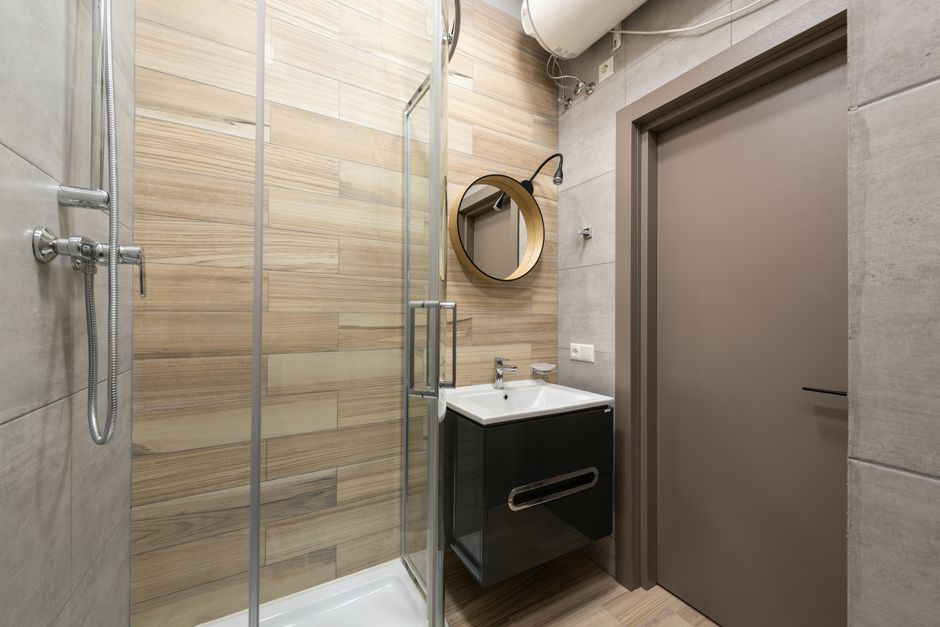
A 12-inch teak stool fits safely only when its footprint leaves clear standing space, the door can move without striking it, its feet sit level, and its published weight rating suits the user. Use the ADA shower-seat height range of 17 to 19 inches as a useful benchmark, then treat grip, drainage, drying, and nearby support as one safety system.
Will a 12-inch teak stool fit safely in my shower?
It fits safely only after the shower floor, door swing, and clear standing area have been measured with the stool in mind. Twelve inches describes one dimension. It does not describe the stool's full footprint, its leg spread, or the room left for feet and turning.
Mark the proposed footprint on the dry shower floor with tape. Open and close the shower door through its full path. Stand where the user will enter, turn, sit, and rise. If the taped area crowds any of those movements, the stool is too large for that position.
The U.S. Access Board says bathing-room doors generally must not swing into required fixture clearance. That rule is not a product-fit certificate for a household teak stool. It is a sound buying test: door clearance and open floor space come before a compact label.
Shape changes the trade-off. A round stool has no corners to meet when space is tight, yet its usable top and floor footprint depend on the product's dimensions. A rectangular stool follows a wall more closely when its long side can sit parallel to it. A corner stool belongs only where the corner is clear of entry and standing space. A folding stool needs clearance both when open and when stored; public source material supplied here does not publish a universal folding-stool safety standard.
Check the maker's published dimensions in every direction, including any feet or frame that extend past the seat. Check its published weight rating too. The Access Board's 250-pound force criterion applies to compliant shower seats and their supporting structures, not automatically to a freestanding teak stool. A product listing without a published rating leaves a key question unanswered.
Buying furniture on price alone can hide the same problem: the object looks small until it meets the room. The measurement-first approach also applies when learning how to judge sale furniture before you commit.
| Option | Who it suits | Cost | Key limitation |
|---|---|---|---|
| Compact teak stool | A buyer whose measured shower floor, door swing, and standing space remain clear | Not published | Its published weight rating and slip resistance must be checked product by product |
| ADA shower-seat benchmark | A buyer using 17 to 19 inches as a seat-height reference | Not published | The Access Board criteria address compliant shower seats, not every freestanding teak stool |
| Non-slip mat or self-stick strips | A shower floor that is slippery | Not published | They improve floor traction but do not replace a level, suitably rated stool or needed support |
| Professionally installed grab bars | A person who needs support beside or inside the tub or shower | Not published | They are anchored support, not seating |
What height should a shower stool be for an adult?
For an adult shower seat, use 17 to 19 inches above the bathroom finish floor as the starting benchmark. The Access Board states: “The top of the seat shall be 17 inches (430 mm) minimum and 19 inches (485 mm) maximum above the bathroom finish floor.”
Measure from the finished shower floor to the top surface where the person sits. Do not measure from the bathroom floor outside the shower if there is a threshold or a different finished level. The reference point is the surface under the stool's feet.
Height is not a style choice. It changes the path from standing to sitting and back again. A stool outside this range is not automatically unsafe, since the cited ADA criterion governs covered accessible shower seats rather than every consumer product. It does mean the buyer needs a clear reason for departing from the benchmark and should verify the product details rather than trusting a photo.
The seat also needs to work with the shower layout. For a standard roll-in shower, the Access Board says a provided seat extends from the back wall to within 3 inches of the compartment entry. That detail shows the underlying principle: a seat belongs in a planned transfer and movement area, not in whatever empty corner remains.
Height is a number. Safe use is a sequence.
Are teak stools safe on wet tile?
Teak stools are safe on wet tile only when the stool is level, its feet do not slide, the floor has traction, and the user has the support needed to sit and stand. Teak itself does not make a wet tile floor non-slip.
The stakes are plain. In its 2008 emergency-department analysis, the CDC estimated 234,094 nonfatal bathroom injuries among people age 15 and older, and found that falls caused 81.1% of the injuries examined. The highest injury rate occurred in or around the tub or shower: 65.8 per 100,000 people.
Start at the floor. The CDC's STEADI checklist directs people to use a non-slip rubber mat or self-stick strips when a tub or shower floor is slippery. It also recommends professionally installed grab bars next to and inside the tub when support is needed. A stool offers a place to sit. An anchored bar offers a handhold. One is not a substitute for the other.
Then inspect the stool before use. Place all feet on the shower floor. Press gently on each side of the seat and look for rocking. Confirm that drainage does not leave soap film beneath the feet. If the stool shifts, rocks, or lacks a published weight rating, do not treat it as ready for use.
Teak brings one useful material trait. The USDA Forest Service identifies teak as Tectona grandis and rates its heartwood as very durable against decay fungi and termites. The same technical sheet says it is not immune to all biological damage and is extremely resistant to preservative treatments. Follow the stool maker's instructions for any finish or treatment. Natural durability is not a cleaning plan.
After each use, remove pooled water and let air reach all sides of the stool. For soap buildup or visible mold on a hard surface, the EPA advises scrubbing with detergent and water, then drying completely. The EPA calls moisture control the key to mold control, advises drying wet or damp areas within 24 to 48 hours after a leak or spill, and recommends more ventilation and more frequent cleaning when shower mold returns.
Wood can resist decay. Water still wins when it stays.
Frequently Asked Questions
Should a shower stool have adjustable non-slip feet?
A stool should sit level and resist sliding on the actual shower floor. Adjustable feet can help on an uneven surface, but public guidance does not publish a universal requirement for them. The CDC advises a non-slip rubber mat or self-stick strips on a slippery tub or shower floor, so feet are one part of the setup rather than the whole answer.
Can I leave a teak stool in the shower all the time?
Teak heartwood is rated very durable against decay fungi and termites by the USDA Forest Service, yet durability is not immunity. Leaving any stool wet keeps moisture in the shower. Dry it after use, improve ventilation when moisture lingers, and follow the maker's finishing instructions.
How do I prevent mold and soap buildup on a teak shower stool?
Remove soap residue with detergent and water, then dry the stool completely. The EPA says moisture control is the key to mold control and advises drying wet or damp areas within 24 to 48 hours after a leak or spill. For recurring shower mold, increase ventilation by running a fan or opening a window and clean more often.
Sources
- U.S. Access Board, Chapter 6: Bathing Rooms
- Centers for Disease Control and Prevention, Nonfatal Bathroom Injuries Among Persons Aged 15 Years and Older
- Centers for Disease Control and Prevention, STEADI Check for Safety
- U.S. Environmental Protection Agency, A Brief Guide to Mold, Moisture and Your Home
- USDA Forest Service, Teak Technical Sheet
Related reading

Can My Local Habitat for Humanity Help Replace My Roof?
Find out when a local Habitat affiliate can help with roof replacement, what income and mortgage rules apply, and what to prepare.

How Do I Choose a Quiet Portable Inverter Generator for My Home?
Choose a quiet portable generator with an essential-load plan, noise and fuel checks, and a safe outdoor setup.
Which Kitchen Updates Will Still Look Good in 2026 and Beyond?
Plan a 2026 kitchen around lasting function, then use flexible accents for trend. Compare white, wood, and colored cabinets with a practical 10-year test.

How to Judge Sale Furniture Before You Commit
Verify sale furniture with an all-in price check, construction review, delivery-route measurements, and return-policy questions.