
Should I Sell Rare Vinyl on Discogs, eBay, to a Shop, or at a Fair?
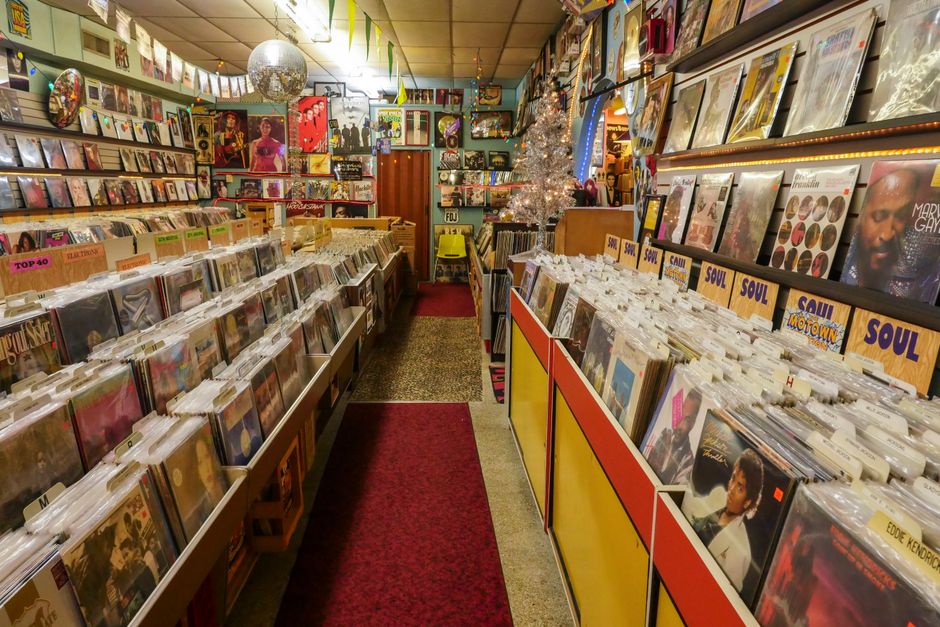
Sell individually on Discogs or eBay when a record has enough value to justify research, careful grading, photographs, packing, and buyer communication. Use a record shop or fair when speed and simplicity matter more than the highest possible sale price. The smart move is not choosing one channel for every record; it is sorting the collection first, then matching each group to the effort and risk you can accept.
Start with a two-pile decision: records that need individual research, and records that do not. The first pile gets an exact pressing check, a condition check, and a channel comparison. The second pile gets a fast, low-friction exit. That sorting step prevents a common waste: spending an hour building a listing for a record whose likely sale proceeds will not cover the work.
Is Discogs or eBay better for selling valuable vinyl records?
Discogs is usually the cleaner fit when the exact pressing and condition are the selling point; eBay can fit when you are prepared to verify its current category-specific fees and manage a broader auction or fixed-price listing process. Neither platform removes the work. Both require accurate identification, conservative grading, packing, and a plan for the money lost to fees and shipping.
Discogs makes its cost structure unusually direct. According to Discogs Support, listing is free and the marketplace charges a 9% selling fee on both the item price and shipping cost, with a $0.10 minimum and $150 maximum per item. Build that fee into the price before publishing the listing. A price that looks strong before the fee can be weak after it.
eBay Canada publishes a standard schedule of a 13.6% final value fee on the total sale amount up to $7,500 for most categories, then 2.35% on the portion above that, plus a $0.30 per-order fee for orders of $10 or less or $0.40 for orders over $10. The important phrase is total sale amount: its fee base includes the item price, handling charges, shipping collected from the buyer, sales tax, and other applicable fees. Its Music category excludes Vinyl Records, so confirm the exact category and country schedule before treating that rate as your own.
| Channel | Best use | Your workload | Known cost signal | Main risk to control |
|---|---|---|---|---|
| Discogs | An exact pressing with condition details buyers will compare | High: identify, grade, photograph, pack, communicate | Free listing; 9% of item price and shipping | Misidentifying the release or overstating condition |
| eBay | A record you want to offer through eBay's listing format | High: identify, grade, photograph, pack, communicate | Check the current category and country schedule before listing | Underestimating fees because shipping and other amounts are in the fee base |
| Record shop | A collection where speed matters more than individual listing work | Low after sorting and transport | No public shop-buying rate in the supplied sources | Accepting an offer before separating potentially valuable records |
| Record fair | A small, manageable group you can sell in person | Medium: preparation, transport, time at the event | No public fair-price or table-cost data in the supplied sources | Arriving without clear grades and prices |
Use the fee-floor check. Before listing, write down the asking price, shipping charged, platform fee, postage, and packing cost. Then ask one blunt question: “Is the remaining amount worth the listing, packing, and buyer-message work?” If the answer is unclear, the record belongs in your shop-or-fair pile, not online by default.
How much less will a record shop pay than selling records myself?
There is no reliable percentage in the supplied public sources, so do not accept a made-up rule such as “shops always pay half.” A shop offer and an individual online sale are different transactions: the shop gives you speed and avoids your individual-listing workload, while you give up control over the final retail price.
Make the comparison with net proceeds, not the biggest number on a price tag. An individual online sale can include platform fees, postage, mailers, inserts, tracking, insurance when appropriate, and the time spent resolving questions or returns. USPS currently lists domestic Media Mail from $4.39 at the Post Office, while Priority Mail starts at $11.50 and Ground Advantage starts at $8.40; the postage figure is only one line in the transaction.
Use this script when you speak with a shop: “I have separated the records that may need individual research. Which group would you buy outright, and which records should I keep out of the lot?” It gives the buyer a clean collection to assess while protecting the records that deserve slower work. If the collection belongs to a living parent rather than an estate, confirm who has authority to sell it first; Does My Parent Need a Power of Attorney or Guardianship? explains why that distinction matters.
Do not compare gross to net. Weak comparison: “The shop offered less than the online price.” Strong comparison: “The shop offer is immediate; the online amount must still absorb fees, shipping, supplies, and my work.” The second version gives you an actual decision, not a number with missing costs.
Should I sell rare records individually or take them to a local shop?
Sell a rare record individually when you can identify the exact release, grade it honestly, and complete the packing and buyer-service work; take the rest to a local shop when the collection is too large, too mixed, or too time-sensitive for that process. The dividing line is not whether a record looks old. It is whether you can document what it is and what condition it is in.
Run the three-check screen before choosing a channel:
- Exact pressing: identify the specific release, not just the artist and album title. Similar-looking copies can be different marketplace items.
- Condition: grade the vinyl and sleeve separately under strong light. Goldmine Magazine says only 2-4% of records remaining from the 1950s and 1960s are truly Near Mint, so Near Mint is not a default label for an old record that appears clean.
- Transaction readiness: photograph the actual item, disclose defects, calculate fees and delivery costs, and set aside appropriate packing materials before you list.
Condition is where many otherwise solid listings fail. Discogs Support uses the Goldmine Standard and says a VG+ record is generally valued at 50% of Near Mint, a VG record at 25%, and Good or Good Plus at 10-15%. Its guidance also says to use Mint sparingly, if at all. A clean-looking cover with a crease, seam split, cut-out hole, or other noticeable defect is not Near Mint.
The safer listing line is specific, not flattering. Weak: “Excellent vintage condition.” Strong: “Vinyl graded VG: surface noise and scratches affect playback; sleeve graded VG with a seam split and writing.” The stronger line lowers the buyer's cognitive load. It also gives a buyer fewer surprises to turn into a return request.
For packing, protect the record and sleeve so they cannot move or rub during transit, then retain tracking and consider insurance when the risk warrants it. The sources provide starting postage prices, but public data here does not set one correct packaging method or insurance threshold. The workable rule is simple: match the protection to the downside of damage, not to optimism.
Finish with a sorting drill. Pull out three records today. For each one, write: “Individual online sale,” “shop quote,” or “fair,” followed by one reason. If you cannot identify the pressing and state the condition without vague language, do not list it yet. Research it first or move it into the low-friction pile.
Frequently Asked Questions
What fees and shipping costs should I expect when selling vinyl online?
Discogs says listings are free, but it charges a 9% fee on both the item price and shipping cost, with a $0.10 minimum and $150 maximum per item. eBay Canada's standard schedule lists a 13.6% final value fee on the total sale amount up to $7,500 for most categories, plus a per-order fee; confirm the exact category and country-specific schedule before listing. USPS lists Media Mail from $4.39, but your delivered cost also includes the mailer, protective inserts, tracking, and insurance when appropriate.
How do I avoid overgrading a vinyl record and getting a return?
Use the Goldmine Standard, inspect under strong light, and disclose every visible or audible flaw rather than letting photos do the talking. Discogs and Goldmine both point sellers toward conservative grading: a VG record is generally valued around 25% of Near Mint, while Good or Good Plus is generally 10-15%. State the record's grade and the sleeve's grade separately, then name scratches, noise, writing, tape, seam splits, cut-outs, and promotional markings.
Are record fairs a good way to sell a small vinyl collection?
A record fair can be a sensible low-shipping, in-person option for a small collection, but public data in the supplied sources does not establish typical fair prices, table costs, or buyer turnout. Treat it as a channel for records you can assess and discuss face-to-face, not as a substitute for researching a potentially valuable pressing. Ask the organizer about seller terms before committing, and keep your best-documented records separate until you have compared individual-sale options.