

Simple Dresses for Everyday Elegance
Last Tuesday I stood in front of my closet for eleven minutes — which is roughly the length of a sitcom cold open, except nobody was laughing and I was late — wearing one sock and holding a dress I bought because the model looked like she had her life together. She probably did. I, meanwhile, had three nearly identical black dresses and nothing that actually worked for a Tuesday that might turn into drinks. That is the One-Piece Problem in its purest form: you want elegance without the mental overhead of building an outfit from scratch every morning, and somehow you end up with a graveyard of "almost" dresses that wrinkle if you look at them wrong.
What I needed — what most of us need, if we're honest — is a small stack of simple, beautiful dresses that do the heavy lifting. Not a closet full of options. A curated handful. This is the dress-stack theory, and it turns out fashion editors, textile scientists, and personal stylists have been saying the same thing from different angles for years. Here's how to build yours.
The Dress-Stack Theory: Why Less Actually Looks More Polished
Imagine your wardrobe as a kitchen. You don't need forty pots to make dinner — you need one good pan, one sharp knife, and maybe a wooden spoon that has seen things. A dress-stack works the same way: three to five silhouettes in a neutral palette, each capable of crossing from grocery run to dinner reservation with a shoe change.
Vogue identifies the simple black dress as one of six essential building blocks of a capsule wardrobe — unmatched, they write, in its ability to transition from day to night with just a change of accessories. Invest in a flattering silhouette that makes you feel confident every time. Pair that with a white shirting piece, classic knits, and straight-leg jeans, and you've got the skeleton of a wardrobe that doesn't require a stylist on retainer.
Courtney Carver, creator of the Project 333 challenge, has dressed with 33 items or fewer every three months since 2010 — over fifteen years of proof that limiting choices removes decision fatigue rather than restricting style. According to Be More With Less, the most effective capsule wardrobes reduce closet stress through intentional, limited choices. You don't need to buy a bunch of new things to start. You need to identify what you actually reach for.
The best simple everyday dresses fall into a short list: a midi shift in a solid neutral, a wrap dress that adjusts to your body, an A-line that skims rather than clings, a knit sheath that forgives a commute, and — if you're feeling slightly dramatic — a bias-cut slip you can layer under a cardigan. That's your stack. Everything else is noise I personally ignored for six years while buying more noise.
The Silhouette Decoder: Matching Dress Shape to Body
A simple dress only looks effortless if the silhouette is doing honest work for your proportions. This is not about "flattering" as a euphemism for hiding yourself. It's about geometry — where the eye travels, where fabric falls, where a waist appears whether or not biology gave you an obvious one.
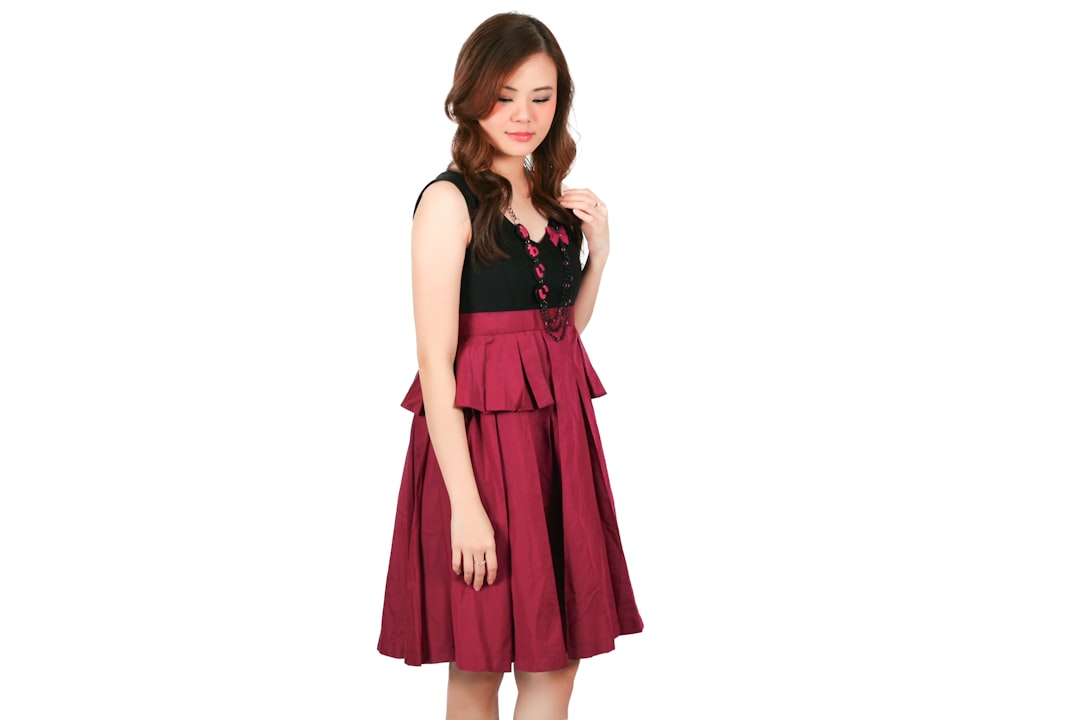
Personal stylist Hellana Mardasian, quoted in Yahoo Shopping, recommends wrap dresses for women with larger busts because they define the waist and accommodate a supportive bra. Stylist Fred Kim suggests fit-and-flare silhouettes for athletic frames — accentuating a toned upper body while adding the illusion of curves at the hip. Think of it like framing a photograph: the dress is the mat board, and the mat board should draw attention to the part of the picture you actually like.
Quick Silhouette Guide by Shape
- Hourglass: Fit-and-flare, A-line, sheath, and wrap dresses that cinch at the natural waist. Macy's confirms these styles enhance curves rather than fighting them.
- Pear: A-line dresses that accentuate the upper body and skim wider hips. Wrap styles that tie at the narrowest point. Sweetheart necklines and ruffled sleeves draw the eye upward.
- Apple: Empire waist dresses that fall from just under the bust, creating the illusion of a waist while skimming the midsection.
- Rectangle: A-line silhouettes that draw in at the waist, plus colorblocked styles that define the sides.
- Petite: Mini or above-the-knee hemlines that elongate legs — like standing on a slightly raised platform all day, but without the platform.
- Plus-size: Veteran designer Jamie Lewin told Yahoo that the asymmetric-hem dress is the freshest silhouette for curvier frames — but structure matters. Choose fabric with body, like linen or silk, not limp jersey that collapses under its own disappointment.
I spent an entire season in jersey dresses that made me look like a slightly deflated pool float. The fabric wasn't wrong for everyone. It was wrong for me. That distinction matters more than any trend forecast.
Fabric Physics: What Keeps a Simple Dress Looking Intentional
Elegance and simplicity share a secret enemy: wrinkles. A gorgeous dress that looks like it slept in your carry-on is not elegant. It's a cry for help.
Textile scientist Vianna Chan, cited by TODAY.com, explains that knits are "springier" fabrics than wovens and hence more resilient — fabrics with denser, thicker weaves resist wrinkles because the yarns are less prone to shifting and crinkling. Think of woven fabric like a row of dominoes: push one, they all fall. Knits snap back like a rubber band that actually paid attention in physics class.
Preeti Arya, a textile expert at the Fashion Institute of Technology, confirms that synthetics like polyester, nylon, and acrylic resist wrinkling because they lack cellulose — the stuff that makes cotton and linen betray you by noon. Tencel and Lyocell drape beautifully and wrinkle less than pure linen. Linen-cotton blends with TENCEL Lyocell reduce wrinkle severity by approximately 40% compared to pure linen — which, to put that in human terms, is the difference between looking crisp at 3 p.m. and looking like you napped in a crumpled paper bag.
For structured everyday dresses, ponte knit — a double-knit with four-way stretch — resists wrinkling, pilling, and fading. Fine-weave wool works for cooler months. In summer, a linen-cotton-Tencel blend gives you breathability without the full linen chaos. Match fabric to season and your tolerance for ironing, which for me is approximately zero.
One Dress, Three Lives: Styling From Desk to Dinner
The entire point of a simple dress is that it functions as a blank page. Same dress, different punctuation marks.
Day: Flat sandals or white sneakers, a denim jacket, minimal gold studs. The black dress under a cotton poplin shirt — another Vogue capsule essential — worn open like a light cardigan. You look assembled. You spent four minutes.
Office: Swap sneakers for loafers or low block heels. Add a structured blazer. A thin belt at the waist if the dress is shift-shaped. Classic knits in cashmere or wool, which Vogue notes improve with age, work layered over a sleeveless sheath when the AC is set to Arctic research station.
Evening: Heels or heeled boots, statement earrings, a clutch instead of a tote, red lip if you're feeling it. The wrap dress goes from desk to date without a full change — which is the whole magic trick. You're not styling three outfits. You're styling one dress with three different accessories, which is how you get "effortless" without it being a lie.
Where to Buy Quality Simple Dresses (Without the Markup Hangover)
Over the past decade, the one-and-done dress has replaced T-shirt-and-jeans as the default everyday uniform, according to Elle UK — with brands like DÔEN, Me+Em, and Rat & Boa leading the charge. DÔEN launched in 2016 as a reaction to minimalist mood, celebrating effortless one-piece dressing. Rat & Boa owns the bias-cut slip and plunge-front maxi for when simple needs to mean "noticeably simple in a good way."
If your budget doesn't include a three-figure dress habit — and mine didn't for a long, embarrassing stretch — The Good Trade highlights accessible options: Quince offers dresses starting at $30 in ECOVERO, organic cotton, and TENCEL Lyocell. Everlane starts around $78 with radical cost transparency. Reformation uses deadstock fabrics and Tencel from $98 in sizes XSP through 3X. Kitri, a direct-to-consumer label founded by Haeni Kim, delivers fresh shapes at friendlier prices.
Buy fewer. Buy in fabrics that survive your actual life. Donate the "almost" dresses after three years of not wearing them — Carver's rule, and a good one. Keep one size in your closet. Identify five outfits you love and let them guide every future purchase.
Building Your Dress-Stack: Start Here
Pick one silhouette from the body-type guide above. Choose a fabric from the season-appropriate list. Buy it in a neutral that works with shoes you already own. Wear it for two weeks before buying a second. That is the entire system.
Simple dresses for everyday elegance aren't about having nothing to wear — they're about having four or five things to wear that always work. I still stand in front of my closet some mornings. But now it's for about forty seconds, and I'm usually already dressed in my head. The dress-stack did that. No stylist required. Just geometry, fabric physics, and the willingness to stop buying dresses that look great on someone who doesn't have your Tuesday.