
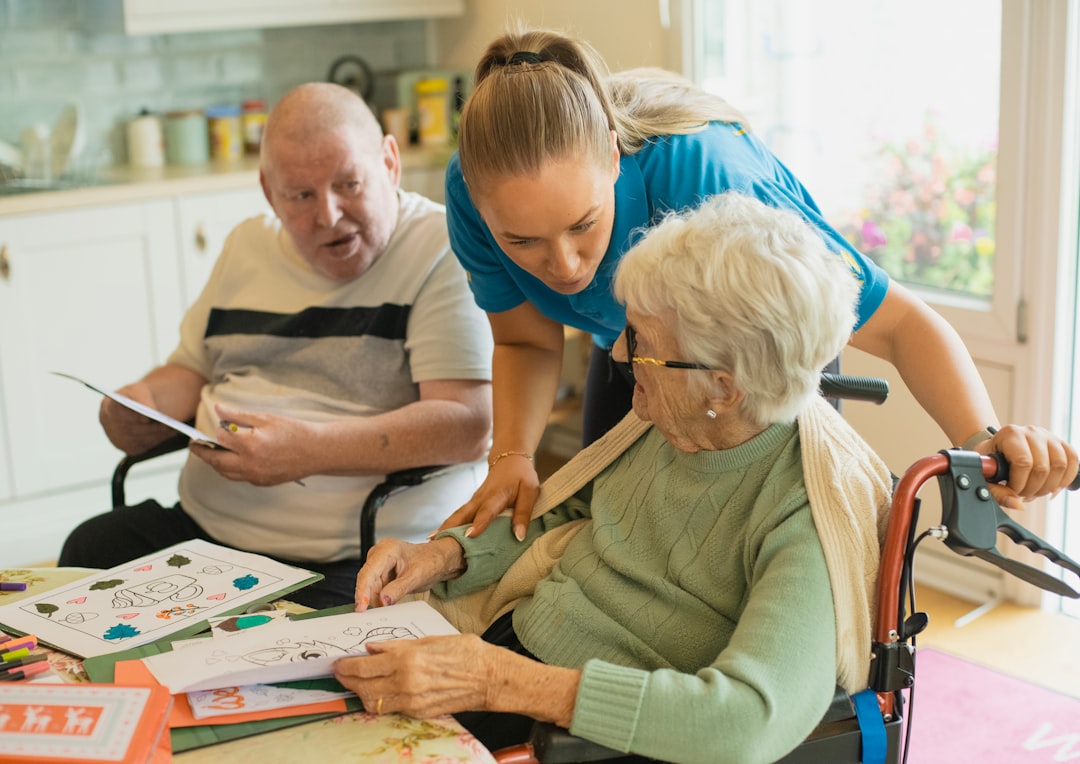
Aging-in-Place Renovations: Stay Home Safely
Picture this: you're standing in your own bathroom at 2 a.m., one hand on the vanity, the other on a wet tile wall that offers exactly zero structural support, and your brain is doing that thing where it runs a probability calculation you never asked for — what are the odds this ends with a hip fracture and a $40,000 hospital bill? I know that bathroom because I stood in one exactly like it for years, telling myself grab bars were "for old people," which is a spectacular category error when you consider that falls are the number-one cause of injury-related hospital visits for older adults and a single hip fracture can cost more than a used car. According to the Home Improvement Research Institute's 2026 Aging in Place Study, 28% of households with an older adult already report difficulty using some aspect of their home — and 75% of adults over 50 say they want to stay put rather than move. Your house wasn't designed for that future-you. It was designed for a person who could step over a shower curb without thinking about it, which is a superpower you don't notice until it's gone.
What follows is the full renovation map — room by room, dollar by dollar, grant program by grant program — for turning a regular house into what I call a Longevity Bunker: not a medical facility disguised as a home, but a place where universal design features work for everyone and the Medicare denial letters stop ruining your Tuesday.
The Room-by-Room Longevity Bunker Checklist
Think of aging-in-place renovations as editing your house's physics engine. You're not adding "senior features." You're removing the tiny daily insults — the 4-inch shower curb, the round doorknob that fights your arthritic thumb, the hallway that turns a wheelchair into a furniture demolition derby — that compound into the decision to leave.
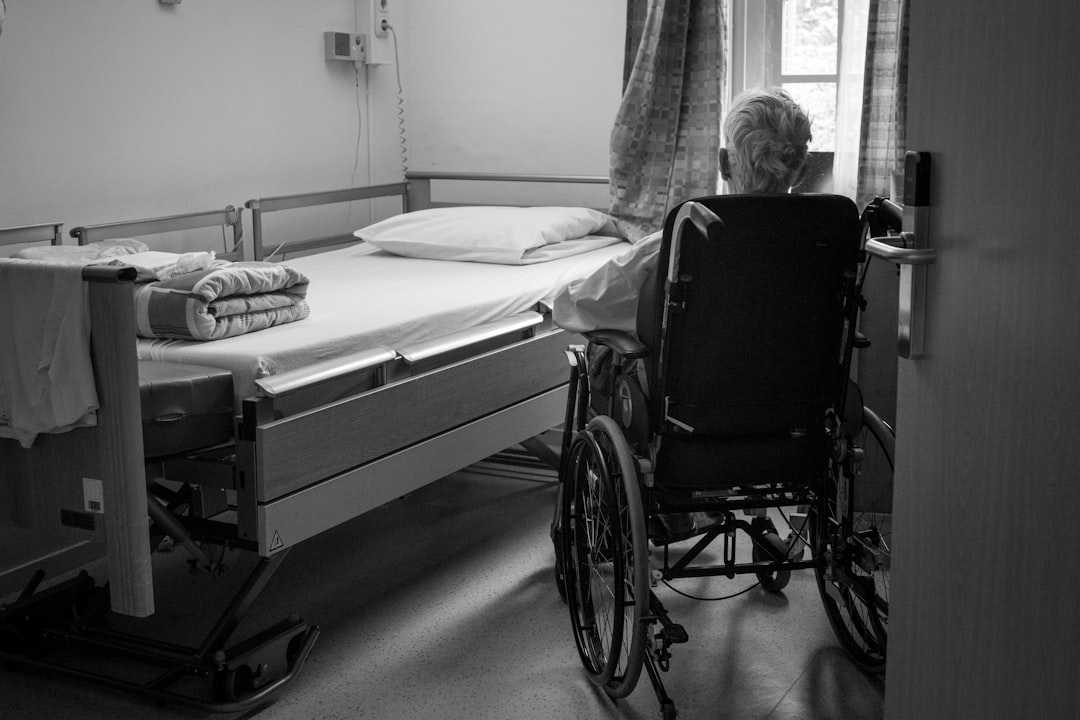
Bathroom: Where 53% of Projects Start
The HIRI study found that 53% of all aging-in-place updates include bathroom modifications, which makes sense when you realize the bathroom is basically a wet obstacle course designed by someone who hates knees. A typical three-bar grab bar package runs $400–$900 installed, according to Cost to Renovate's 2026 cost guide. Individual bars land between $100 and $350 each. A full accessible bathroom remodel — curbless shower, reinforced walls, proper lighting, non-slip tile — runs $8,000 to $25,000. That's roughly the price of a decent used Honda Civic, except instead of depreciating in your driveway, it keeps you out of a nursing home.
Entryways, Kitchens, and the Rest of the House
The National Association of Home Builders recommends a no-step entry, doorways 32–36 inches wide, and hallways 36–42 inches wide — dimensions that feel spacious until you try wheeling a 27-inch chair through a 30-inch doorframe and discover geometry is not negotiable. Lever handles instead of knobs. Rocker light switches instead of the tiny toggle kind. Non-slip floors with flush thresholds. A whole-home retrofit combining these elements typically runs $18,000 to $75,000, per Cost to Renovate. The HIRI data shows 37% of homeowners who completed an aging-in-place project spent between $5,000 and $24,999 — the "I fixed the death-trap bathroom but haven't tackled the stairs yet" tier that describes, embarrassingly, my own current situation.
What a Curbless Shower Actually Costs (And Why It's Not Just a Fancy Shower)
A curbless — zero-threshold, roll-in, whatever marketing term you prefer — shower costs $6,000 to $10,000 installed in 2026, according to Cost to Renovate. The curbless detail alone adds 20–30% over a standard curbed shower, roughly $2,000 to $5,000 extra, because you're not just swapping fixtures. You're re-engineering the floor plane: recessing the pan, sloping toward a linear drain (typically a quarter-inch per foot — about the thickness of three stacked credit cards over twelve inches), and waterproofing everything so your downstairs ceiling doesn't become an indoor rain feature.
Here's the thought experiment that made the price click for me: imagine you're a wheelchair. Not metaphorically — actually picture the geometry. A standard shower curb is a 4-to-6-inch wall you cannot climb. A curbless shower is a room you roll into. The cost difference is the price of converting a cliff into a ramp. For someone with significant mobility limitations, that's not luxury tile — that's the difference between showering independently and needing a human crane. NAHB's Certified Aging-in-Place Specialist program, developed with AARP, exists because contractors who understand this distinction are worth finding before you write the check.
Medicare and Grab Bars: The Denial That Ruins Everyone's Day
Short answer, delivered with the gentle compassion of a parking ticket: Original Medicare does not cover grab bars. Full stop.
The Centers for Medicare & Medicaid Services National Coverage Determination 280.1 is explicit: "Grab Bars — Deny - self-help device; not primarily medical in nature (§1861(n) of the Act)." Same denial applies to bathtub seats, raised toilet seats, bath lifts, and stairway elevators. Medicare's logic treats these as home improvements, not durable medical equipment — even though a $200 grab bar can prevent a $40,000 fall. Walking canes, walkers, wheelchairs, and patient lifts are covered under specific clinical criteria. Commodes are covered if you're bed- or room-confined. But the wall-mounted bar that would keep you from becoming room-confined in the first place? That's on you.
I spent an afternoon on hold with Medicare convinced they'd cover the bars "if my doctor wrote a letter." They won't. Some Medicare Advantage plans offer supplemental home-modification benefits — check your specific plan — but Original Medicare is a hard no. Budget accordingly, and install them into studs with proper anchoring, not the adhesive kind that peel off the drywall like a Post-it note the first time you actually need them. (Yes, I tried the adhesive kind first. Yes, I'm embarrassed.)
Universal Design: Features That Work at 35 and 85
Universal design is the architectural philosophy that says: build it once, correctly, for the full range of human bodies — not "normal people" plus a retrofit kit for when things go sideways. The NAHB defines it as features like no-step entries, one-story living, wide doorways, lever handles, rocker switches, and non-slip floors that reduce fall risk for everyone, not just people with disabilities.
Personify universal design for a second. It sits in your house like a quiet, competent roommate who never asks for credit. The lever handle doesn't care if your hands are arthritic or full of grocery bags. The flush threshold doesn't care if you're pushing a stroller or a walker. The curbless shower doesn't care if you're 35 or 85 — it just removes a trip hazard from a room where 80% of falls happen. According to Cost to Renovate, 73% of NAHB remodelers reported increased requests for aging-in-place features over the past five years. The demand isn't a niche trend. It's the housing market finally catching up to demographic reality: the percentage of older adults living in traditional houses has climbed over the past two decades, per HIRI, and those houses were built for a different species of knee.
Making Your Home Wheelchair Accessible (And Finding Money to Pay for It)
Wheelchair accessibility is a systems problem, not a single renovation. You need 32-inch minimum clear doorways (36 is better), 36–42-inch hallways, a 60-by-30-inch minimum shower footprint with a 36-inch entry, grab bars anchored to blocking, reachable switches and outlets, and — critically — a no-step path from the street to the bathroom without treating every doorway like a toll booth.
Stair lifts run $2,200 to $8,500 for straight runs and $7,500 to $15,000+ for curved ones, per Cost to Renovate. Residential elevators start at $30,000 and climb past $60,000 — roughly the cost of a new car that only travels vertically. If that number makes you wince, the grant landscape is where hope lives:
- VA Disability Housing Grants: The Department of Veterans Affairs offers Specially Adapted Housing grants up to $126,526 in FY2026 for qualifying service-connected disabilities, Special Home Adaptation grants up to $25,350, and Temporary Residence Adaptation grants up to $50,961 (SAH-eligible) or $9,100 (SHA-eligible) for modifying a family member's home. Eligible work includes ramps, widened doorways, and bathroom accessibility changes.
- USDA Section 504 Home Repair: The USDA Rural Development program provides loans up to $40,000 at 1% interest for very-low-income homeowners, plus grants up to $10,000 ($15,000 in disaster areas) for homeowners 62+ to remove health and safety hazards. Combined assistance caps at $50,000 ($55,000 in disaster areas).
- HUD Older Adults Home Modification Grant Program: HUD's OAHMP allocated $64 million in FY2026 to nonprofits, state and local governments, and public housing authorities. Individual awards range from $1 million to $2 million per grantee, funding low-cost, high-impact modifications — grab bars, handrails, lever-handled fixtures, temporary ramps — for low-income seniors. You don't apply directly; you find a local grantee running the program in your area.
These programs won't cover a $60,000 elevator. They will cover the grab bars, the ramp, the lever handles — the unglamorous stuff that keeps you alive in your own kitchen. Start with your Area Agency on Aging, your state's Medicaid HCBS waiver office, and your local housing authority. The money exists. Finding it requires the same persistence as finding a contractor who won't install grab bars into hollow drywall.
Start Before You Need It
The cruel irony of aging-in-place renovations is that the best time to do them is before you need them — when you're still standing in that 2 a.m. bathroom telling yourself it'll be fine. It might be fine. Or you might be one wet tile away from a hospital bed and a rehab timeline measured in months instead of a weekend project measured in hours.
Pick one room. Probably the bathroom — 53% of everyone else does. Get a CAPS-certified contractor if you can. Install the grab bars into studs. Price the curbless shower even if you can't afford it yet, so you know what you're saving toward. Check VA, USDA, and local HUD grantees before you assume you're paying retail. Your house can be a Longevity Bunker. It just needs editing — and the editing is cheaper than the alternative, which is a facility that charges you to sleep in a room that isn't yours.