
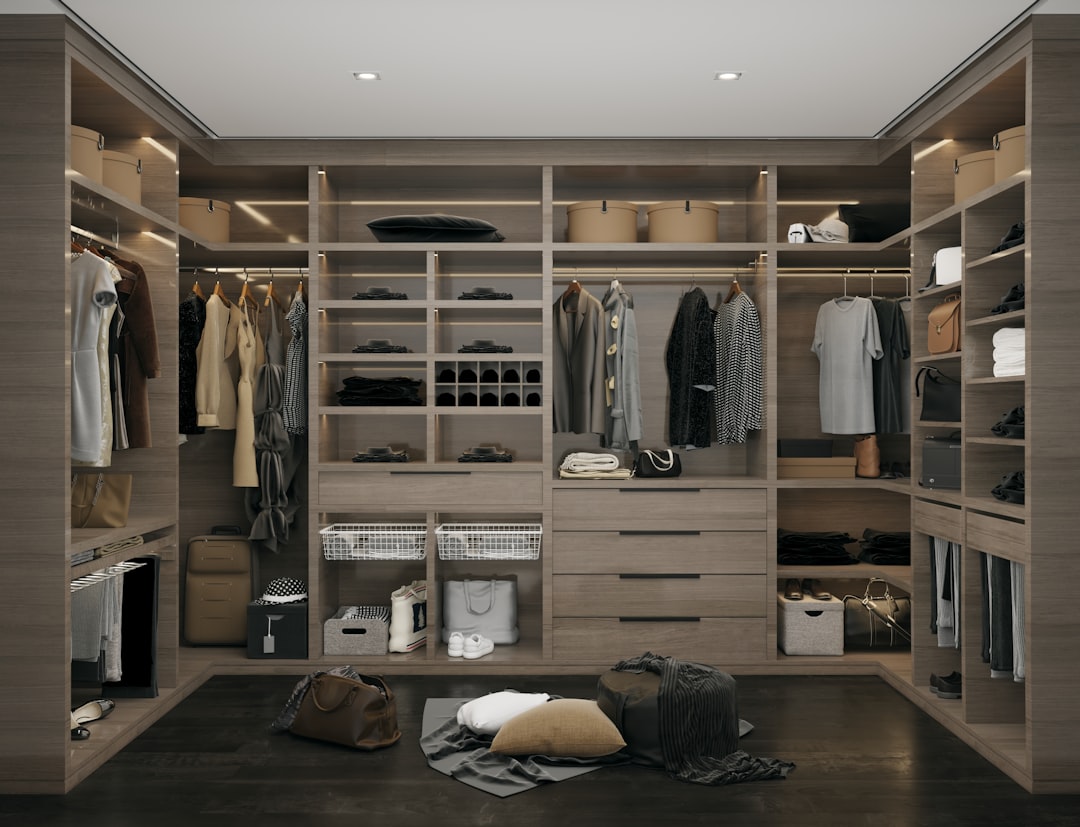
The best closet organizer system depends on the job: choose IKEA PAX for a configurable wardrobe wall, Elfa for fast, adjustable rail-based storage, EasyClosets for a custom-cut walk-in plan, and DIY shelving only when you can plan, mount, and finish it reliably. For resale, a closet renovation has an estimated 83% cost recovery nationally, but a good layout matters more than a brand badge.
Closet shopping has a tiny villain lurking behind it: the Square-Footage Goblin. It whispers that every empty wall deserves a towering cabinet, every shoe deserves its own little condominium, and every price tag is somehow only the beginning. The useful response is less romantic: measure the room, decide how much adjustability you need, then buy the system whose limits you can live with.
What is the best closet organizer system?
Elfa is the best all-around choice when adjustability and component-level planning matter most, while IKEA PAX is the better fit for a wardrobe-like built-in look and EasyClosets is the stronger middle ground for a custom-cut walk-in plan. There is no single champion because these products solve different problems, a fact the Square-Footage Goblin would very much prefer to obscure.
The Container Store's November 2025 Elfa pricing guide makes the system's logic visible in plain parts: closet rods are listed at $17 to $24, 39-inch hanging standards at $25, 60-inch standards at $38, and ventilated shelf brackets at $11 to $15 depending on depth. Its hanging standards should be no more than 36 inches apart, as should closet-rod holders. That is not glamorous. It is, however, the sort of boring structural rule that prevents a dramatic shelf-and-coat avalanche later.
IKEA PAX works differently. It begins with cabinet-like frames, then fills them with KOMPLEMENT drawers, shelves, shoe racks, jewelry trays, and pull-out hangers. IKEA's PAX planning guide says its planner can generate a product list, which is useful when a closet has become a small municipal planning problem rather than a place to hang jackets.
EasyClosets occupies the middle territory: more tailored than a retail modular kit, but intended for homeowner installation rather than presented in the supplied materials as a full-service installed option. Its published configurations include drawers, hanging sections, shoe shelving, and adjustable shelves, with sizing designed around a specific walk-in layout.
| Option | Who it suits | Published cost | Key limitation |
|---|---|---|---|
| IKEA PAX | Buyers who want configurable wardrobe frames and KOMPLEMENT interiors | Not published in supplied sources | Must be attached flush to the wall; baseboards may need removal |
| Elfa | Buyers who want adjustable, component-based hanging and shelving | Platinum Elfa Reach-In base system: $560 in Consumer Reports' test; current components also published separately | Final configuration price is not published as one universal total |
| EasyClosets | Buyers planning a custom-cut, homeowner-installed walk-in | Starts at $2,400 for a published 7-by-9-foot example; $2,700 for a published 7-by-10-foot example | Finishes, drawers, hardware, and mounting choices can change the final price |
| ClosetMaid ShelfTrack | Buyers considering a basic wire organizer | $100 in Consumer Reports' six-foot-closet test | Price and result are from an older test, not a current universal quote |
| Rubbermaid HomeFree | Buyers considering a basic wire organizer | $90 in Consumer Reports' six-foot-closet test | Price and result are from an older test, not a current universal quote |
The table contains two different species of number, and mixing them would be a classic Goblin maneuver. Consumer Reports tested systems designed for a 6-foot-wide closet; EasyClosets publishes starting estimates for larger walk-in examples; Elfa also publishes individual component prices. They are useful comparison markers, not interchangeable project quotes.
Is IKEA PAX good for a walk-in closet?
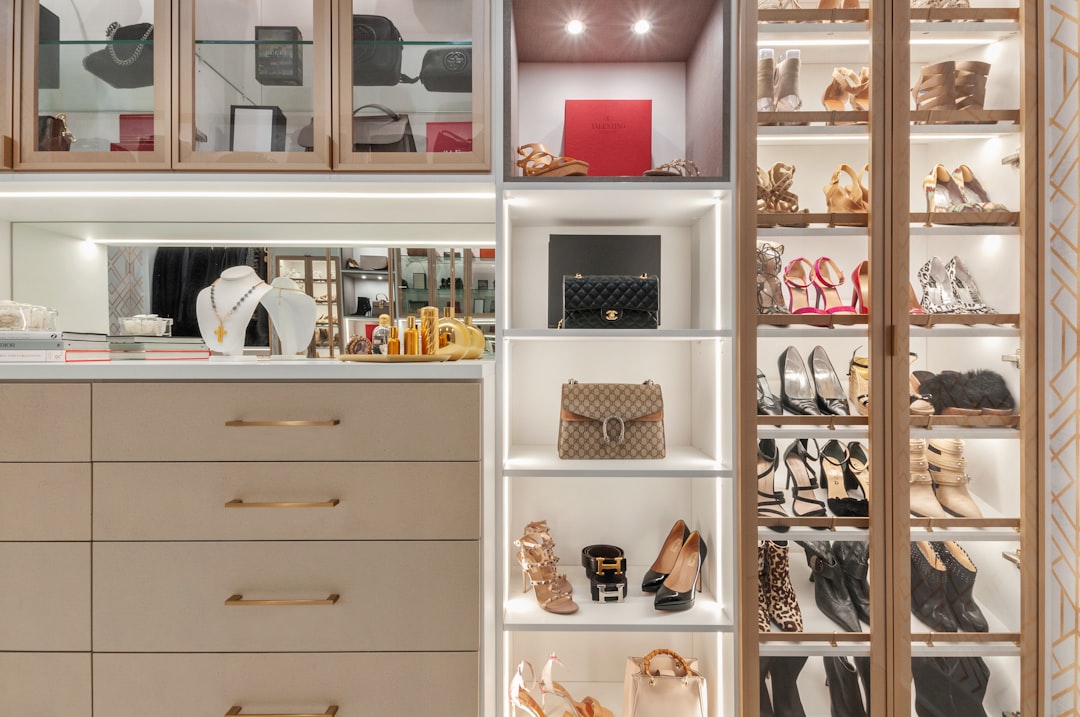
IKEA PAX can be good for a walk-in closet when its fixed frame dimensions fit the walls and leave enough clearance for doors and movement. The frames come in 13 3/4-inch and 22 7/8-inch depths, widths from 19 5/8 inches to 39 1/4 inches, and heights of 79 1/4 inches or 93 1/8 inches, according to IKEA and NBC News. Those dimensions are the actual plot twist: PAX is flexible inside the frame, not infinitely flexible outside it.
For hinged doors, IKEA specifies an additional 1/2 inch of height clearance; sliding doors need an additional 2 inches. That sounds small until the closet ceiling is exactly where optimism goes to get its shoes stuck. Plan the frame height and door clearance before selecting drawers or the nicer interior accessories.
Wall conditions deserve equal billing. NBC News reported that PAX must be attached flush to the wall for support, and baseboards may need to be removed to make that possible. The same report cited an average DIY assembly time of about 5.5 hours from a TaskRabbit IKEA closet builder, compared with 1.5 to 2 hours for a professional. Sliding doors can take about 5 hours. In other words, a low product price, where available, should never be mistaken for a low time price.
Use PAX in a walk-in when you want a clean wall of wardrobe modules and can design around those exact dimensions. Skip the daydreaming version of PAX if your walls, baseboards, ceiling clearance, or aisle leave no tolerance. Furniture is patient. A cramped aisle is not.
Elfa vs PAX: which is better?
Elfa is better for reconfigurable open storage; PAX is better for a more furniture-like wardrobe arrangement with enclosed-frame options. Elfa's epoxy-bonded steel framework, top tracks, standards, brackets, rods, and shelves are a system of adjustable parts. PAX uses a set of rectangular frames with interiors selected afterward. Neither is “better” in the abstract, because abstract closets do not need to open a door while carrying laundry.
Elfa offers unusually legible planning constraints. The Container Store lists top tracks from $20 for 25 inches to $35 for 73 inches, and specifies anchor counts for certain track lengths: four anchors for a 25-inch track and seven for a 50-inch track. Its 16-inch ventilated shelves are listed from $28 to $41 depending on length. This lets a buyer see the mechanical skeleton before the accessories begin multiplying like polite rabbits.
PAX asks a different question: can the room accept one of its frame sizes, attached to the wall, with enough door clearance? If yes, the KOMPLEMENT range lets the interior do substantial work. If no, an adjustable rail-based system may waste less space and less patience.
Installation evidence also nudges the decision. In an older Consumer Reports comparison, the Platinum Elfa Reach-In base system took 35 minutes for a two-person installation, the fastest of five tested systems, and cost $560. The tested IKEA product was Algot, a discontinued line rather than PAX, so its 160-minute result and $170 tested price should not be used as a verdict on current PAX. It is still a fine warning label for the broader truth: modular storage can demand serious assembly time.
DIY, pre-fab, and custom: where does the money go?
DIY saves only when the plan, tools, wall mounting, and finish work are within reach; pre-fab buys repeatable parts; custom-cut systems buy a more tailored layout. That is the cost-to-value ladder without the glitter. A basic wire system tested by Consumer Reports cost $90 for Rubbermaid HomeFree, $100 for ClosetMaid ShelfTrack, and $160 for Martha Stewart Classic Deluxe, all in the publication's six-foot-wide test. Those historical tested prices are helpful floor markers, not current store quotes.
At the tailored end of this source set, EasyClosets lists a 7-by-9-foot master closet configuration starting at $2,400 and a 7-by-10-foot standard master walk-in starting at $2,700. Both examples use a white Euro 2MM finish and polished-chrome hardware, with the published details differing in mounting and configuration. The company explicitly notes that upgrades can change the final price, which is the tiny label every closet budget needs taped to its forehead.
For a resale lens, the 2025 Remodeling Impact Report from NARI and the National Association of REALTORS® estimates an 83% cost recovery for a closet renovation, its second-highest recovery rate among surveyed projects. The report is based on 177 NARI member cost-survey responses, 4,005 REALTOR® survey responses, and homeowner research, using assumptions for a typical 2,300-square-foot post-1978 home in good condition and standard or typical-quality materials. That makes it a useful national compass, not an appraisal of one particular set of shoe shelves.
The request for Reddit-rated, one-year recommendations runs into a hard wall: the supplied research sources contain no Reddit ratings, posts, or long-term community survey data. Public data here does not cover which system Reddit prefers after a year, so this guide cannot manufacture a crowd verdict from the wallpaper. Compare published dimensions, mounting needs, installation burden, and scope instead.
Frequently Asked Questions
How much does a custom closet system cost?
EasyClosets publishes starting estimates of $2,400 for a 7-by-9-foot master closet example and $2,700 for a 7-by-10-foot standard master walk-in example. Those are materials-and-design starting estimates, and the company says finishes, drawers, hardware, and mounting choices can change the final price. Full-service installed custom-closet pricing is not published in the supplied sources.
Can I build my own closet system?
Yes, provided you can plan the space, assemble the components, and complete the required wall mounting. NBC News reported an average DIY PAX assembly time of about 5.5 hours from a TaskRabbit IKEA closet builder, while Consumer Reports found two-person installations of tested organizer systems took 35 to 160 minutes. Those figures are not directly comparable systems, but they make the point: assembly time is part of the price.
What closet system adds the most home value?
The supplied sources do not identify one brand or system as adding the most value. The 2025 Remodeling Impact Report estimates that a closet renovation recovers 83% of project cost at resale, using national assumptions for a typical 2,300-square-foot post-1978 home in good condition. Treat that as a benchmark for a well-executed renovation, not a promise for an individual installation.
The sensible final move is almost offensively unglamorous: map the walls, ceiling, baseboards, door clearance, and the clothes that actually need homes. Then choose the system that fits those facts. The Square-Footage Goblin will protest. It always does.
Sources
- National Association of REALTORS® and National Association of the Remodeling Industry, 2025 Remodeling Impact Report
- Consumer Reports, Choose the Right Closet Organizer
- NBC News, Buying and Installing an IKEA Closet System
- IKEA, How to Design Your Perfect PAX Wardrobe
- The Container Store, Elfa Component Pricing Guide
- EasyClosets, Popular Everyday Closet Designs