
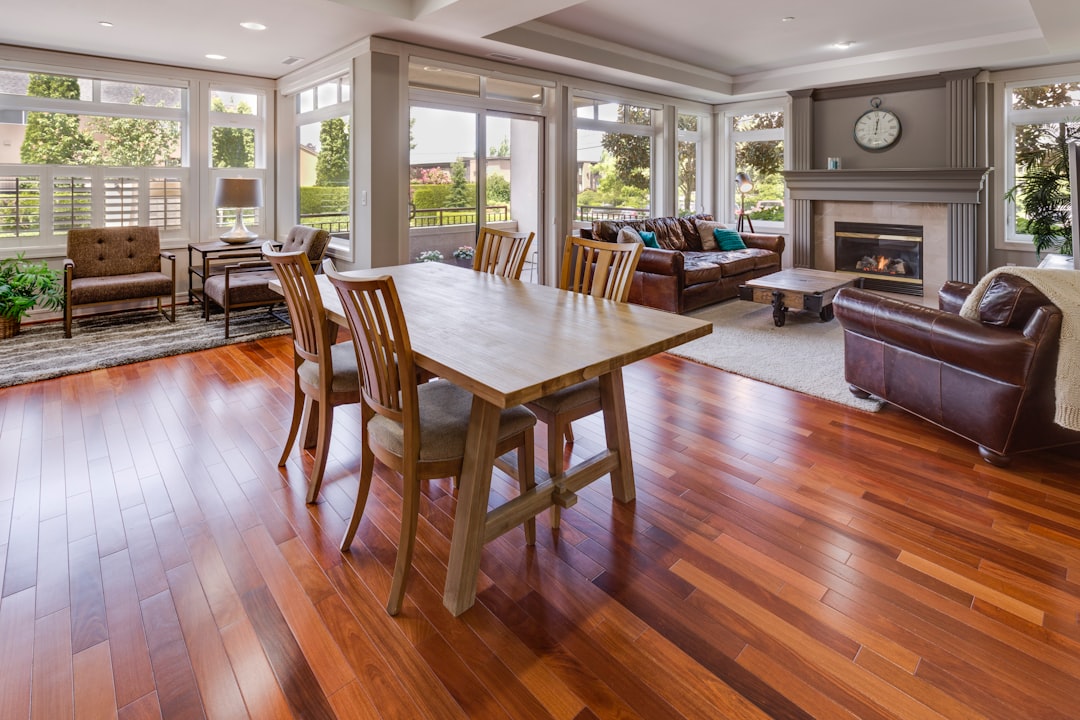
Best Living Room Flooring: Hardwood vs LVP vs Tile
I was standing in someone else's open house last spring — you know the kind, staged within an inch of its life, every throw pillow arranged like it had a union contract — when I noticed I hadn't looked at a single wall. My eyes kept dropping to the floor. Not because I'm some flooring obsessive (okay, maybe a little now), but because the living room had this weird patchwork situation: fake wood in the seating area, tile near the kitchen peninsula, and a transition strip that looked like it had been installed by someone who'd given up on life mid-project. The realtor called it "design-forward zoning." I called it the Floor-Identity Crisis — that moment when your main living space can't decide what it wants to be, and you inherit the confusion for the next fifteen years or until you sell.
That afternoon sent me down a rabbit hole I didn't plan for: hardwood versus luxury vinyl plank versus engineered wood versus tile versus carpet, all competing for the same square footage where your dog naps, your kids spill juice, and future buyers form opinions before they've seen the kitchen. Here's what I found — with actual numbers, not Pinterest vibes.
The Resale-Value Reality Check: Why Wood Keeps Winning
Let's talk money in terms you can actually feel. Imagine you spend $5,000 refinishing the hardwood that's been hiding under your carpet since the Clinton administration. According to the National Association of Realtors Remodeling Impact Report, you don't just get your five grand back — you get roughly $7,350. That's a 147% cost recovery rate, which makes kitchen renovations (around 75%) look like they showed up to the wrong meeting.
New hardwood installation delivers an estimated 118% ROI — meaning sellers typically recoup more than the project cost when they sell. Refinishing existing hardwood performs even better. The Floor Covering News puts it bluntly: refinishing ranks number one among all interior residential projects for cost recovery, ahead of bathroom and kitchen overhauls. Nearly 80% of homeowners believe wood floors add the most value among flooring options, and real estate professionals report homes with wood can sell for up to 10% more than comparable homes without it.
Scale that to a $400,000 house and you're looking at a potential $40,000 swing — which is not couch money. It's "maybe we can actually afford the down payment on the next place" money. According to research cited by the National Wood Flooring Association, hardwood carries a dollar premium of $2,080 to $6,500 compared to homes without it, and roughly 54% of homebuyers say they'd pay more for hardwood. Buyers specifically pay about $6,500 more for new wood flooring and around $5,000 more for refinished hardwood. I did not refinish my floors before my last move. I am telling you this so you don't repeat my exact mistake while reading an article about not making my exact mistake.
Is LVP Flooring Good for Living Rooms? (The Honest Answer)
Luxury vinyl plank — LVP, or what I started calling "Photogenic Plastic" before the industry made that term uncool — has become the most popular flooring sold in the United States by volume, and for legitimate reasons. According to D and G Flooring, LVP runs $4 to $12 per square foot installed, lasts 15 to 25 years, and delivers what they describe as roughly 80% of hardwood's visual appeal at 40% to 60% of the cost. Waterproof. Scratch-resistant. Pet-friendly. The plank that survives what your actual life throws at it.
Here's the gut-punch though: LVP returns 50% to 80% ROI at resale, while hardwood returns 70% to 118%. On that same $400,000 home, hardwood might add $8,000 to $20,000 in potential sale price over LVP. LVP's resale impact is neutral to slightly positive — fine, not transformative. If you're staying five-plus years and your household includes creatures who treat floors as a personal canvas, LVP is the Performance-to-Price Champion. If you're selling within three years and your floors are the first thing visible in listing photos, wood is the move. I chose LVP in my last living room because of a dog. The dog is gone. The LVP remains. No regrets, but I'd do the math differently now.
LVP vs. Engineered Hardwood: The Fork in the Road
Engineered hardwood ($6 to $18 per square foot installed, 20 to 50 year lifespan) sits in the awkward middle — real wood veneer on layered substrate, refinishable once or twice depending on thickness, more stable in humidity swings than solid hardwood. LVP wins on waterproof performance, upfront cost, and kid/pet durability. Engineered wood wins on authenticity, refinishability, and resale premium.
Think of it as a time-horizon bet. Planning to stay 15 years? Engineered white oak earns its keep through refinishing cycles that vinyl simply cannot offer — scratch LVP deep enough and you're ripping it out, not sanding it. Moving in four years? Quality 20-mil SPC vinyl gets you 80% of the look at half the price, and buyers in that window care more about "move-in ready" than species of oak. The NWFA notes LVP costs $3 to $7 per square foot installed — roughly 40% to 60% less than solid hardwood — which is the kind of gap that funds an actual vacation instead of a flooring upgrade.
What About Tile and Carpet? The Specialists
Tile ($8 to $25 per square foot installed) is the indestructible option — 50 to 75+ years if you don't drop a cast-iron skillet on it, waterproof, brilliant near kitchen transitions in open-concept layouts. The tradeoff is hardness and coldness; great for the zone where spills happen, less inviting where you actually sit on the floor playing board games. Tile projects generate 50% to 80% ROI according to Floor Covering News — respectable, though not wood territory.
Carpet ($3 to $12 per square foot installed) is the comfort king and the resale court jester. Warm, quiet, forgiving on knees — and needing replacement every 5 to 15 years with ROI in the 25% to 40% range. For a formal living room you barely enter, maybe. For the main family hub where life actually happens? You're essentially installing a five-year timer.
Can You Mix Wood and Tile in an Open Living Room?
Yes — and in modern open-concept homes, you probably should consider it, because the kitchen isn't a separate room anymore; it's a spill zone attached to your couch. The trick is making the combination look intentional rather than like a flooring clearance sale.
According to The Spruce, combining tile and wood requires attention to both form and function — matching undertones (warm with warm, cool with cool) creates visual harmony, while flush transitions achieved by adjusting subfloor height prevent that embarrassing lip you trip on carrying laundry. Apollo Tile recommends tile in moisture-prone zones and wood in living areas, with transition options including T-moldings for same-height materials, reducer strips for height differences, or flush seamless transitions when you're willing to do subfloor surgery.
Align tile edges with wood plank direction. Leave expansion gaps between materials so humidity doesn't warp your wood while the tile sits there smugly unchanged. Consistent flooring throughout an open main floor reads as move-in ready; thoughtful zone definition reads as designed. The Floor-Identity Crisis reads as "we ran out of one material halfway through." I cannot stress this enough because I have lived in a rental with the Crisis and it aged me.
What Living Room Flooring Actually Costs (Installed)
For a typical 300-square-foot living room, here's the installed math — the number that matters because nobody floors a room with material alone unless you're unusually confident and have a very forgiving spouse:
- Hardwood: $8–$25/sq ft → $2,400–$7,500 total. Lifespan 50–100+ years with refinishing.
- Engineered wood: $6–$18/sq ft → $1,800–$5,400 total. Lifespan 20–50 years.
- LVP: $4–$12/sq ft → $1,200–$3,600 total. Lifespan 15–25 years.
- Tile: $8–$25/sq ft → $2,400–$7,500 total. Lifespan 50–75+ years.
- Carpet: $3–$12/sq ft → $900–$3,600 total. Lifespan 5–15 years.
Most homeowners land between $8 and $18 per square foot installed for quality materials, per industry cost data. Hidden costs — furniture moving, subfloor prep, old floor removal — can add 15% to 30% beyond the sticker price. Budget the full project, not the per-foot fantasy number from the showroom.
Pet-Friendly, Kid-Friendly, and the Decision That Actually Fits Your Life
Big dogs and small humans share one hobby: testing floor durability until something loses. For that household profile, waterproof LVP or high-wear-layer vinyl is the pragmatic pick — scratch resistance and zero panic when the juice box detonates. Engineered hardwood works if you're willing to accept dents as character and you don't have a 90-pound lab with anxiety and traction issues.
Hardwood still wins the resale trophy. LVP wins the daily-living trophy. Tile wins the "nothing will ever destroy this except my will to live during grout cleaning" trophy. Carpet wins comfort and loses everything else.
My actual recommendation after all this research: match the floor to your time horizon and your messiest household member. Selling soon and the floors show in every photo? Refinish existing hardwood if you've got it — 147% ROI is the universe handing you free money. Staying a decade with pets and kids? Quality LVP. Open kitchen-living layout? Tile near the kitchen, wood in the living zone, undertones matched like you're coordinating wine with dinner. And if you're standing in an open house right now judging someone else's transition strip instead of their crown molding — welcome. You're already thinking like a person who gets it.