
Dining Table Trends 2026: Warm Wood, Oval Shapes & Extendables
Last Tuesday I stood in my dining room holding a tape measure like a confused archaeologist, trying to figure out whether a 72-inch rectangle would fit between the radiator and the wall where my dog has decided the baseboard is a chew toy. The table I was replacing — a gray-washed rectangle from the sharp-corner era — had started to feel like furniture for a conference room that forgot to send the agenda. Every guest sat at opposite ends like opposing counsel. Nobody talked. The room had the emotional temperature of a parking garage.
Turns out I wasn't alone in this particular flavor of domestic embarrassment. According to House Beautiful, curved shapes and round tables are taking precedence over sharp corners across the industry, bringing what designers call softness and flow — which is designer-speak for "stop making your friends feel like they're waiting for a performance review." If you're shopping for a dining table in 2026, here's what the data, the experts, and my tape-measure humiliation actually say about shapes, materials, sizes, and whether you need that extendable mechanism.
The Shape Question: Why Ovals Won the Sweet-Spot Derby
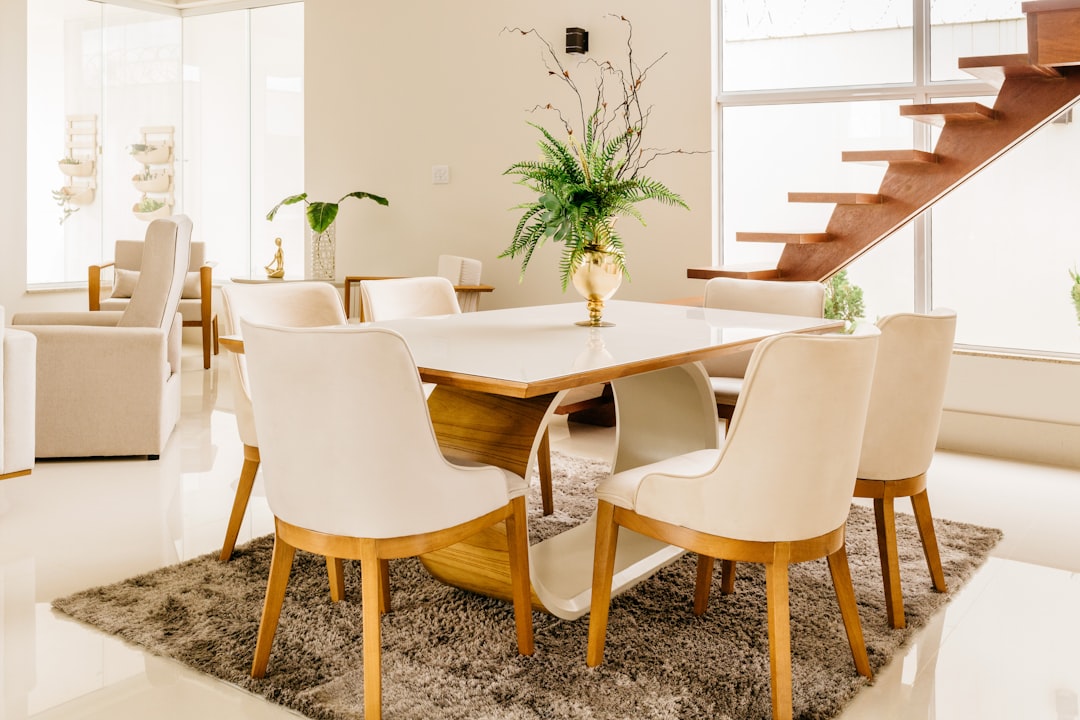
Imagine your dining room is a small city and the table is the town square. A sharp rectangle is a grid of streets — efficient, yes, but everyone navigates around corners like they're late for something. A round table is a plaza where everyone sees everyone, but in tight spaces it eats perimeter like a hungry roommate. The oval — and I didn't invent this term but I'm going to use it anyway — is the Flow-Seat: it seats like a rectangle but moves through a room like it owes the hallway an apology.
Afandar Design Trends puts it plainly: "Oval tables are the sweet spot for many homes because they seat like a rectangle but feel lighter." Rounded and softly sculpted shapes are leading for everyday family spaces, reducing what the last decade called the hard-edge look — all those 90-degree corners that made open-plan kitchens feel like a showroom where touching anything voids the warranty.
Round tables are absolutely in style, especially pedestal designs that keep knees clear in compact rooms. HERNEST's expert reviews from early 2026 identify the dominant theme as "Sculptural Naturalism" — organic shapes, mixed materials, textural bases, artisanal craftsmanship, and warm neutrals. That's a mouthful, but the translation is simple: your table should look like it grew there, not like it was air-dropped from a catalog.
Houzz search data from early 2026 backs the curve obsession at scale — rounded kitchen islands up 123%, curved peninsulas up 61%, arched pantry doors up 130%. If curves are colonizing kitchens, the dining table was never going to stay rectangular out of stubbornness.
Warm Wood Tones: The 262% Plot Twist Nobody Saw Coming
For years, lighter bleached woods and cool gray finishes ran the room like they owned the lease. Then something shifted — and when I say "something," I mean interest in darker woods surged 262% year-over-year, according to Home Accents Today's coverage of Moe's Home's 2026 Design Forecast. To feel that number: imagine 24.9% of industry insiders caring about darker woods in 2024, then 90.1% caring in 2025. That's not a trend. That's a mass conversion event — like everyone simultaneously remembered wood is literally what trees are made of.
Moe's Home surveyed 487 industry insiders — interior designers, retailers, buyers — and found mocha brown rose from 58.5% to 79.8% interest, its third consecutive year of growth. Maura Dineen, the company's creative director, told House Beautiful that darker woods "anchor a space by pairing effortlessly with stone, metal, textured neutrals." Dining tables are the second most popular category driving demand for rich wood finishes — right after sideboards, which tells you people aren't just buying one warm wood piece. They're building a whole mood.
Good Housekeeping frames 2026 as a return to wood-clad dining rooms: "Warm, rich and moody woods paired with a touch of color make for an intimate setting." Walnut, cerused oak, dark matte oak — these are the finishes showing up on editor-tested tables from October 2025 through February 2026. Global Google searches for "heritage" rose 13% year-over-year, which Home Accents Today reads as renewed hunger for legacy materials and storytelling. Translation: people want furniture that looks like it could survive a move and a breakup.
What's the Most Popular Material Right Now?
Wood is the anchor — full stop. Solid wood and glass lead market type segments according to Cognitive Market Research, which valued the global dining table market at $16.98 billion in 2025 and projects growth to $24.5 billion by 2033 at a 4.7% CAGR. Oak, walnut, and ash in matte finishes dominate the residential conversation, with engineered and sintered stone tabletops rising as the durable, heat-resistant alternative to marble for people who actually use their table for hot dishes and homework disasters.
Stone is having a parallel moment. Over 76% of design-industry respondents in the Moe's Home forecast called travertine a leading material for 2026, per House Beautiful. Houzz search data shows travertine flooring up 84% and terracotta flooring up 55% in early 2026 — the earth is reclaiming the dining room from ultra-white minimalism. Casa Italy Singapore notes warm earth tones — terracotta, caramel wood finishes, sage green accents — replacing the sterile white era. Solid wood remains preferred for durability and refinishing potential, which matters if you're the kind of person who spills red wine and then pretends it was always part of the grain pattern. I am that person.
What Size Dining Table Fits a Small Family?
Here's the rule that saved me from buying a table sized for a medieval banquet: each seated person needs about 24 inches of table width, per HERNEST's testing standards. Picture a standard pillow — that's roughly your elbow room. A comfortable six-person table starts around 72 inches long. For a family of four in a compact home, the common picks are compact ovals, four-to-six-seater rectangles, and round tables in the 110–130 cm range, according to Afandar.
Casa Italy Singapore offers practical benchmarks: standard four-seater rectangular extendable tables measure 120–140 cm, expanding to 160–180 cm for six people. Round tables of 100–120 cm diameter suit most four-seater layouts in compact homes. For six at a round table, look at 120–135 cm diameter. These aren't arbitrary numbers — they're the difference between passing the salt without performing a gymnastics routine and watching your guest's knee negotiate with a table leg like it's a toll booth.
Good Housekeeping also notes combined seating arrangements — upholstered chairs plus benches or banquettes — trending for space-saving, which pairs well with smaller tables in rooms doing double duty as homework zones and at-home entertaining spaces. At-home entertaining is back, and homeowners want layouts that foster conversation and put guests at ease. Your table size and your seating mix are the same problem wearing different hats.
Should You Buy an Extendable Dining Table?
Short answer: if your dining room is smaller than your social calendar, yes. Extendable designs with hidden mechanisms — butterfly leaves, concealed extensions, smooth glide systems — are preferred over oversized fixed tables that dominate the room 364 days a year like a guest who never leaves, according to Afandar. Casa Italy puts it cleanly: "Extendable dining tables remain one of the most trending dining tables. This flexibility allows families to save space on regular days while preparing for gatherings."
Cognitive Market Research identifies multifunctional and modular designs — extendable, foldable, convertible tables with hidden storage — as a key market trend, driven by urbanization and home entertainment. The mechanisms have gotten better-looking too. They're no longer the clunky practical afterthoughts of a decade ago; many newer designs hide their guts and keep the same visual rhythm when expanded. I bought extendable partly because I host twice a year and didn't want a permanent eight-seater performing dead-lounge-act duty the rest of the time. The table earns its square footage on Thanksgiving and then politely shrinks back into being a four-top that doesn't bully the room.
The global market growth — nearly $8 billion added between 2025 and 2033 — isn't coming from people buying bigger fixed tables. It's coming from people who want one piece of furniture to behave like three, which is the most honest thing furniture has attempted since the invention of the storage ottoman.
Putting It Together: A Table That Survives 2026 and 2036
The through-line across every source — House Beautiful, Good Housekeeping, HERNEST, Houzz, the market reports — is warmth over sterility, curves over corners, and flexibility over floor-plan hostage situations. An oval or soft-cornered rectangle in warm walnut or oak, possibly extendable, possibly paired with a stone top or travertine accents, is the 2026 consensus without being boring consensus. It's the furniture equivalent of dressing well without looking like you tried.
Measure your room before you fall in love with a photo. Budget for 24 inches per person. Pick wood you can live with when the trendy finish of 2028 arrives and immediately looks dated — because natural grain ages like a person, not like a hashtag. And if you're standing in your dining room with a tape measure right now, wondering whether the oval will fit: it probably will, and your guests will actually talk to each other. That alone is worth more than whatever sharp-corner rectangle is sitting in a warehouse sale waiting to make your next dinner feel like a deposition.