
The Earring Came Back, and It Brought Friends
For about a decade, the correct way to wear earrings was to pretend you weren't wearing them at all — delicate gold hoops so thin they could barely catch light, studs modest enough to apologize for existing, the entire aesthetic oriented around the idea that wealth should whisper. Then something happened on the Spring 2026 runways at Saint Laurent and Chloé, and the whisper became a shout. Chandelier earrings that grazed shoulders. Chunky sculptural hoops that looked like they'd been forged by someone who'd never heard the phrase "quiet luxury." Ear cuffs stacked three deep without a single piercing.
The pendulum swung. Hard.
What Actually Happened to Earrings in 2026
According to Who What Wear, 2026 isn't about reinvention — it's about reorientation. The five biggest earring trends right now are mix-and-match ear stacks, decadent drops, playful pearls, diamonds (yes, just diamonds, worn without irony), and casual ear cuffs. The through-line isn't minimalism. It's not maximalism either, exactly. It's permission — permission to wear the heirloom chandelier earrings your grandmother left you with a T-shirt, permission to stack a vintage hoop with a modern cuff and three tiny studs that don't match, permission to stop pretending that jewelry is supposed to be invisible.
Customer searches for pearl earrings increased 133% on Net-a-Porter in the last three months, Harper's Bazaar reports. But these aren't your mother's round pearl studs — they're smaller, asymmetric, often baroque-shaped, the kind of organic irregularity that makes you look twice. Sculptural silver earrings dominate the other half of the equation: designers shaping wire into flowing, organic forms that catch light and create dimension, the jewelry equivalent of wearing a small architectural experiment on your ear.
The clearest signal came from the runways and red carpets. Dior's 2027 Cruise collection and Chanel's Cruise 2026/2027 both leaned into chunky, oversized earrings — floral forms, crystal drops, the kind of pieces that make a blazer look like it's trying harder than you are. Demi Moore wore chunky earrings at Cannes. Emily Blunt, Rihanna, and Venus Williams all showed up to the 2026 Met Gala in ear cuffs. When Cartier and Tiffany start making ear cuffs in their signature collections, you know the trend has left the realm of "cool kids on Instagram" and entered the realm of "your aunt will ask you where you got those."
The Hoop Situation
Hoop earrings remain in the top three best-selling earring styles globally year after year, according to Jewelers of America (via AJLuxe). But the kind of hoop that's selling has shifted. Thin, minimalist hoops in the 14-20mm range are still the most-worn everyday item across all age groups — they're the jewelry equivalent of a white T-shirt, the thing you reach for when you're not thinking about it. But the hoops getting attention in 2026 are chunky medium hoops in the 20-30mm range with wide tubes, hammered surfaces, twisted textures, anything that makes the hoop feel like an object rather than an outline.
The most universally flattering size is still 16-20mm, but the dominant social-media styling approach is asymmetric stacking: a larger hoop in the first lobe piercing, a smaller hoop or stud in the second or third. It's the visual version of saying "I thought about this, but not too much."
Chandeliers That Actually Touch Your Collarbone
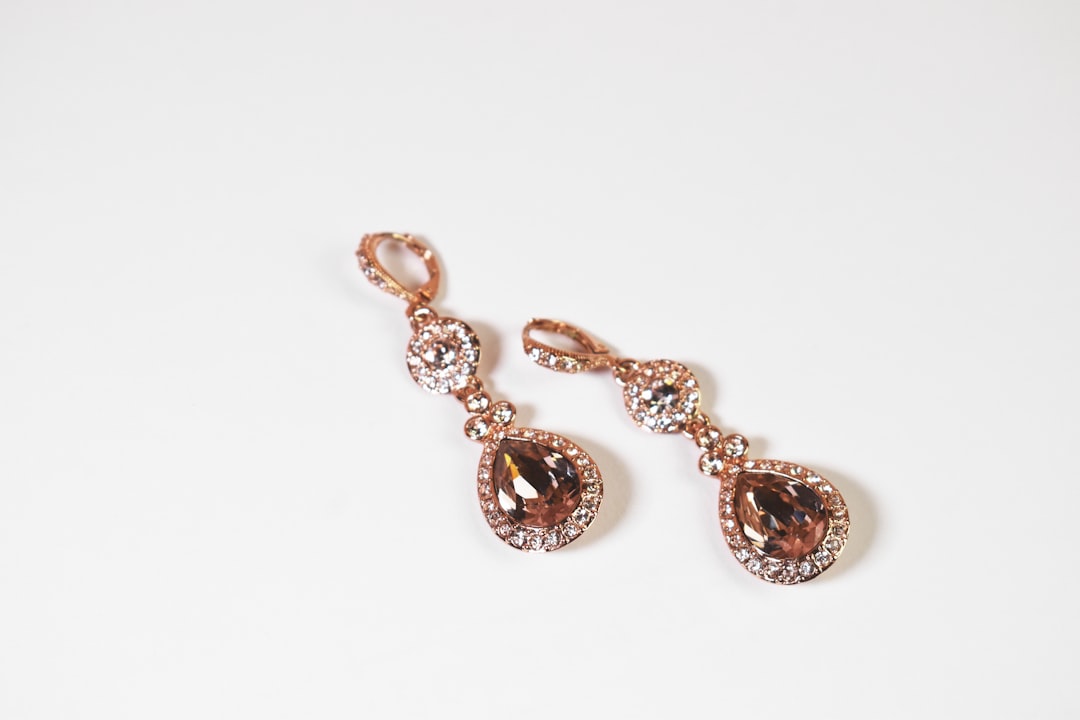
Last year's drop earring was modest, maybe an inch and a half long, the kind of thing that moved when you turned your head but didn't make a scene about it. Spring 2026 chandeliers nearly graze the shoulder, StyleCheer notes. Chanel and Saint Laurent both built entire runway stories around long earrings, and the message was clear: if you're going to wear a chandelier, commit to the drama.
Here's the thing about chandelier earrings that nobody tells you until you try to wear them — they work best when everything else you're wearing is ordinary. A blazer with crystal chandeliers. Denim with molten gold earrings that swing when you walk. The earring does the talking; your outfit shuts up and listens. Vogue Arabia makes this point explicitly: chunky earrings reject quiet luxury in favor of excess, but the excess works because it's surrounded by restraint.
Are chandelier earrings still fashionable? Yes, but only if they're long, only if they're genuinely statement-making, only if you're willing to let them be the entire point of the outfit. Modest chandeliers — the kind that dangle politely an inch below your earlobe and don't make eye contact — are out. Chandeliers that could double as small kinetic sculptures are in.
Ear Cuffs Stopped Being a Trend and Became a Category
Ear cuffs debuted in 2014 when Anita Ko put one on Jennifer Lawrence, and everyone assumed it was a flash-in-the-pan thing that would disappear by 2016. It did not disappear. The Couture Show points out that ear cuffs have grown in popularity every single year since that debut — not as a recurring trend that comes and goes, but as a permanent category that keeps expanding.
Contemporary ear cuffs are open circles that slide onto the helix without a piercing, evolved from the punk piercing culture of the '80s but refined into something your mother would wear to a wedding. The 2026 versions are wraparound styles, often crystal-lined, that mimic a full stack of helix and conch studs without requiring you to sit through the actual piercings. Fendi and Lama Jouni both showed ear cuffs on the runway, and now fine jewelry designers make ear cuffs that coordinate with earrings as a modern suite — you're not buying an ear cuff as a standalone novelty; you're buying it as part of a system.
The appeal is obvious once you think about it for more than three seconds: you get the visual payoff of a curated ear stack without the commitment, the healing time, the risk of your body deciding it doesn't want a piece of metal living in your cartilage for the next six months. You get to change your mind. That's the whole point.
What Earrings Actually Go With Everything
The question "what earrings go with everything" has two answers depending on whether you mean "what can I wear every single day without thinking about it" or "what can I wear with any outfit when I am thinking about it."
For the first question: small to medium gold hoops (14-20mm), thin and classic, are still the undefeated champion. They work with a suit. They work with a T-shirt. They work with a wedding dress. They are the platonic ideal of a default, which is not an insult — sometimes you need a default.
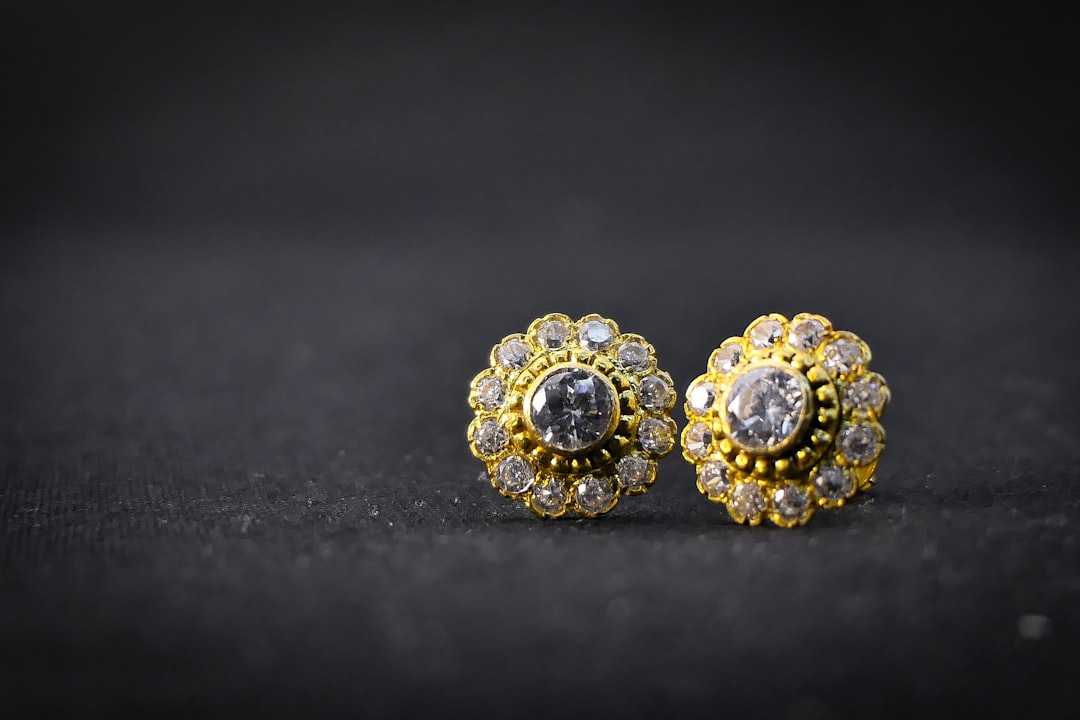
For the second question: small diamond or pearl studs, but specifically the 2026 versions — slightly irregular baroque pearls, or diamonds set in chunky bezels that have some weight to them. They're neutral enough to not fight with a patterned outfit, but substantial enough that they don't disappear.
The third, more interesting answer: stacking creates its own versatility. A curated ear stack with a mix of hoops, studs, and a cuff can work with almost anything because the stack is the statement — your outfit doesn't need to coordinate with the earrings; the earrings coordinate with each other, and your outfit just has to not actively interfere. Harper's Bazaar calls this the "no rules" approach, and it's the dominant styling philosophy right now: mixed metals, mixed styles, pieces that span three generations of your family's jewelry box, all worn at the same time without apology.
Face Shape, or Why You Keep Buying Earrings That Look Great in the Store and Weird on You
The brutal truth about face shape and earrings is that most of the advice you'll find is either uselessly vague ("elongate your face with vertical lines!") or based on the idea that your goal is to make your face look like a different face, which seems like a lot of effort.
Here's the actually useful version: if your face is round, long earrings (chandeliers, long drops) create a vertical line that balances the proportions. If your face is long or oval, you have the most flexibility — hoops, studs, chandeliers, all of it works, which is either a blessing or a curse depending on how you feel about decision-making. If your face is square or angular, rounded shapes (hoops, circular studs) soften the angles. If your face is heart-shaped, earrings that are wider at the bottom (teardrops, chandeliers) balance a narrower chin.
But here's the thing nobody mentions: this advice assumes you want balance. Sometimes you don't. Sometimes you want to lean into the thing your face already does. Angular face, angular earrings, the whole effect sharp enough to cut glass. Round face, big round hoops, the whole thing soft and deliberate. The rules are descriptive, not prescriptive — they tell you what will happen, not what you should do about it.
The Everyday Earring Checklist
The best everyday earrings are the ones you can put on without looking in a mirror, that won't catch on your sweater, that you forget you're wearing until someone compliments them. For most people, this means:
- Small to medium hoops (14-20mm) in gold or silver
- Lightweight studs (pearls, diamonds, or simple metal balls)
- Huggies (tiny hoops that sit close to the lobe)
- A single ear cuff if you've found one that stays put
The 2026 twist is that "everyday" now includes small asymmetric stacks — a hoop in the first piercing, a stud in the second, maybe a cuff on the helix. It's more thought than the single-pair approach, but once you've assembled the stack, it becomes your new default. You're not deciding what earrings to wear every morning; you're just putting on the same three pieces, which is functionally identical to putting on the same single pair, except now you look like you tried.
I have worn the same small gold hoop in my first piercing and the same tiny diamond stud in my second piercing almost every day for two years, which means I have definitely spent more time thinking about earring trends than I have spent actually changing my earrings. This is very on-brand for someone who just wrote 1,400 words about earrings.