
Men's Luxury Watch Guide: Brands, Budgets & Value
I was standing in front of a boutique case at 4:47 p.m. on a Tuesday — fluorescent light, glass between me and a Submariner that had apparently decided my net worth was a suggestion rather than a fact — when a sales associate asked what I was looking for. I said "something timeless." What I meant was "something that makes me look like I have my life together without requiring me to sell a kidney." That gap between what we say at the counter and what we actually need is what I call Wrist-Commitment Anxiety, and it is the invisible tax on every first luxury watch purchase.
This guide exists because I read roughly six thousand words of market data so you do not have to spiral alone at 2 a.m. on Chrono24. We are going to cover the best men's watch brands, where to start on a real budget, whether these things hold value (spoiler: some do, most do not, and I have bought the wrong kind anyway), and the eternal Rolex-versus-Omega-versus-TAG Heuer standoff that forums treat like a blood sport.
The Brand Stack: Who Actually Matters
Imagine the luxury watch world as a nightclub with a very strict bouncer. At the velvet rope sit Rolex, Patek Philippe, and Audemars Piguet — the so-called Holy Trinity when you add Vacheron Constantin, though Cartier and OMEGA absolutely belong in the conversation for mere mortals who do not have a family office. According to Bob's Watches, the top five luxury watch brands for men are Rolex, Patek Philippe, Audemars Piguet, OMEGA, and Cartier — a list that tracks with where collectors actually spend money, not just where Instagram thinks they should.
Rolex is the bouncer who also owns the building. Per Bob's Watches' luxury market guide, popular Rolex models are often unavailable at retail, with waitlists stretching years — which is like trying to buy concert tickets except the ticket also tells time and your grandchildren might fight over it. OMEGA brings space-race mythology and Bond-film glamour at a lower altitude. TAG Heuer sits in the sporty chronograph lane with serious racing pedigree but softer resale gravity than the crown or the Greek letter.
Below the headline names, entry-level luxury is where most sane first purchases happen: Longines from around $1,000 pre-owned, Oris from $1,200, Tissot from $350 new. Paul Altieri, founder of Bob's Watches, calls the Tissot PRX Quartz — about $350 new, $250 pre-owned, Swiss-made with sapphire crystal and 100 meters of water resistance — one of the cheapest genuine luxury watches you can buy. That is not flex money. That is "I want a real watch and I also pay rent" money.
Three Price Universes (And Where You Probably Belong)
Think of watch budgets like airline seats. Economy-plus ($1,000–$3,000) gets you off the ground with dignity. Business class ($3,000–$10,000) is where Swiss engineering stops apologizing. First class ($10,000+) is when the watch starts looking at you like an asset manager.
Entry-level luxury: under $3,000
According to Bob's Watches, strong picks include the Tissot PRX Powermatic 80 (~$725 new), Hamilton Khaki Field (~$695 new), and pre-owned Longines Flagship Heritage from ~$1,000. Bob's Watches recommends budgeting $1,000–$3,000 for a first luxury watch to access quality Swiss brands with solid construction — roughly the cost of a decent laptop, except this laptop ticks audibly and strangers ask about it in elevators.
Mid-range: $3,000–$10,000
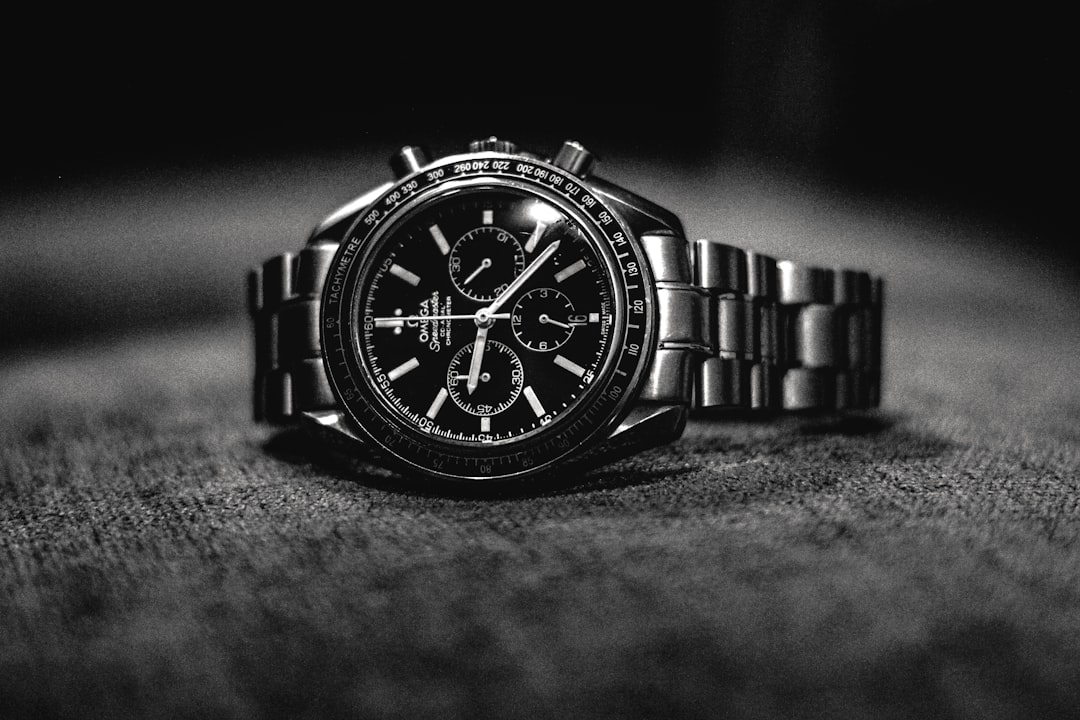
This is the sweet spot Bob's Watches calls "where exceptional craftsmanship meets relative accessibility." Standouts include the Tudor Black Bay 58 ($3,200–$3,800 pre-owned), OMEGA Seamaster Diver 300M ($4,500–$5,500 pre-owned), and the OMEGA Speedmaster Professional Moonwatch ($6,000–$7,500 pre-owned). The Rolex Oyster Perpetual 36 ($5,500–$6,500 pre-owned), with Caliber 3230 and a 70-hour power reserve, is — per Bob's Watches — "the quintessential expression of Rolex's watchmaking philosophy." It is also the best answer to "what is the best everyday men's watch?" if your wrist and your bank account can agree on 36 millimeters.
High-end: $10,000 and beyond
Rolex Submariner ($8,100–$9,500 pre-owned), Cartier Santos, Tudor Black Bay GMT, and the grail-tier Patek Philippe Nautilus and Audemars Piguet Royal Oak live here. The global luxury watch market is projected to reach $59.9 billion by 2028, per Morgan Stanley and LuxeConsult analyses cited by Bob's Watches — a number so large that if you converted it into $350 Tissot PRX units you would need a warehouse and a very understanding spouse.
Do Watches Hold Their Value? (The Honest Version)
Most consumer goods depreciate the moment you touch them — like a new car driving off the lot, except the car does not need a $400 service every five years. Certain timepieces, though, punch through that curve. As Bob's Watches puts it, brands like Rolex, Patek Philippe, and Audemars Piguet "consistently outperform expectations," with Rolex sports models leading in appreciation and liquidity.
Under $5,000, investment-grade options include the Tudor Black Bay 58 and OMEGA Seamaster Diver 300M. From $5K–$10K, look at the Oyster Perpetual, Tudor Black Bay GMT, and Cartier Santos. Above $10K, the Daytona, Nautilus, and Royal Oak dominate conversation — and resale boards. Complete sets with original box and papers command a 15–30% premium on resale, per Bob's Watches' market guide. Pre-owned watches often run 20–40% below retail, which is the secondary market doing what retail cannot: selling you the watch without the three-year waitlist performance art.
"Select luxury watches can be excellent investments, particularly Rolex sports models, Patek Philippe classics, and limited editions from prestigious brands. However, buy for enjoyment first, investment potential second."
I ignored that advice once. I bought a watch because the forum said it was "heating up." It heated up the way my hope did — briefly, then not at all. Buy what you will wear on the Tuesday when nobody is watching.
Rolex vs OMEGA vs TAG Heuer: Pick a Fight, Then Pick a Watch
Rolex wins on resale, waitlist mystique, and the sheer psychic volume of the crown. OMEGA wins on heritage-per-dollar — you get Moonwatch lore and Master Chronometer tech without selling a motorcycle. TAG Heuer wins on accessible chronograph charisma; the Carrera ($4,500–$5,500 pre-owned, per Bob's Watches) is a legitimate sports watch that does not require an inheritance.
Which is "better" depends on what you are optimizing for. If liquidity and status are the game, Rolex. If engineering storytelling and value land in the same place, OMEGA. If you want racing DNA and a lower entry ticket, TAG Heuer. None of these choices makes you smarter than the others — only better matched to your actual life, which is a concept the internet consistently fails to respect.
Match the Watch to Your Life, Not Your Fantasy
Dive watches — Submariner, Seamaster, Black Bay 58 — suit people who actually get wet or just want a case that survives door frames. Dress watches like the Cartier Tank Must (~$2,000 pre-owned) work for offices and dinners where a rotating bezel would look like you got lost on the way to a yacht you do not own. Daily drivers? The Oyster Perpetual 36 remains the cleanest one-watch answer: 100 meters water resistance, no date clutter, enough Rolex DNA to satisfy the lizard part of your brain that craves recognition.
Younger collectors in their 30s are entering the market earlier than previous generations, per Bob's Watches — and online platforms like Chrono24 and Hodinkee have reported 40% year-over-year increases in transaction volume. The secondary market, as Bob's Watches notes, "delivers value, accessibility, and diversity that new watch retail cannot match." Translation: you are not late. You are just shopping in the room where the inventory actually lives.
What to Do Next
Spend $1,000–$3,000 if it is your first luxury watch and you want Swiss quality without financial vertigo. Stretch to $3,000–$7,000 if you want the highest-liquidity bracket — Seamaster, Black Bay, Speedmaster territory. Buy pre-owned from reputable sellers, insist on box and papers when resale matters, and try the watch on your wrist before your credit card leaves your hand. Weight, lug width, and dial proportion are not abstract specs; they are the difference between a watch you wear and a watch that haunts your drawer.
Luxury watches are tiny mechanical arrogance machines strapped to your pulse — absurd, beautiful, occasionally a decent store of value. Pick the one that fits your Tuesday, not your fantasy Saturday. I am still working on that myself.