
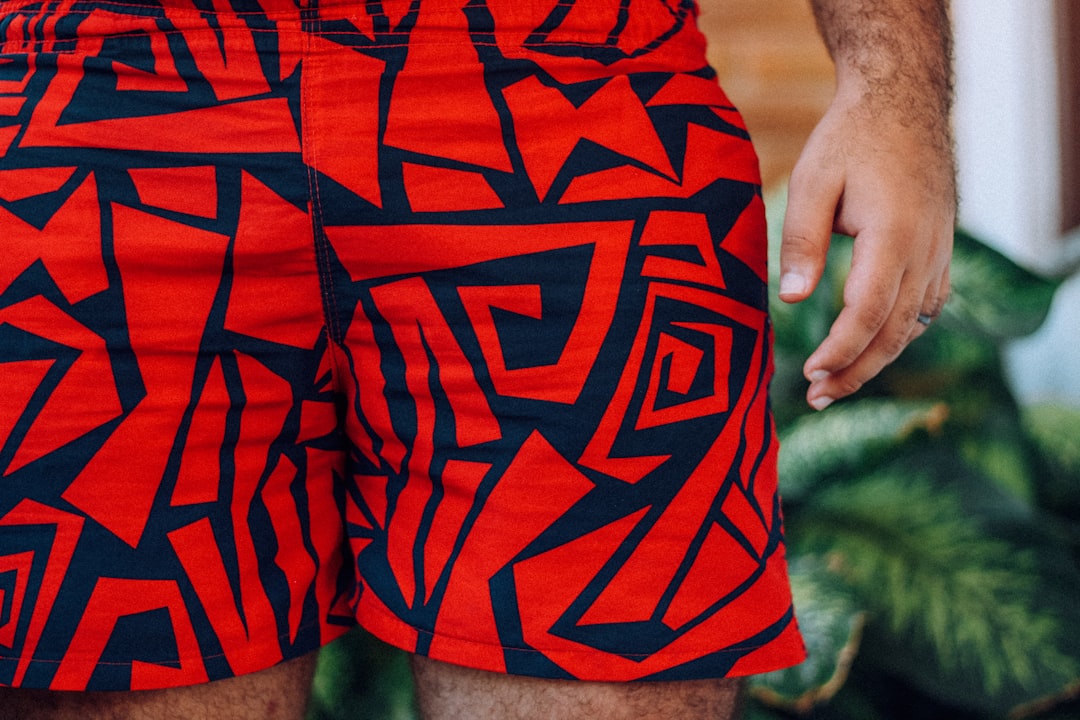
Men's Swim Shorts Inseam Guide: 2, 4, 5, and 7 Inches
Last summer I stood in a beach shop holding two pairs of swim trunks — one tagged 4-inch inseam, one 7-inch — and realized I had absolutely no idea what either number meant in the real world. The 4-inch pair looked like a napkin with a drawstring. The 7-inch pair looked like respectable shorts I'd wear to a barbecue in Ohio. Same waist size. Same price. Completely different species of garment. That moment is what I now call Inseam Anxiety: the specific dread of buying swimwear based on a measurement taken from your crotch to a hem you've never seen on your own body.
Here's what nobody tells you upfront — swim trunk inseam is not a fashion detail. It's a proportion engine. Two inches of fabric difference can make a 5'7" guy look like he borrowed his dad's board shorts or like he just stepped off a yacht in Saint-Tropez. This guide walks through every major inseam length, who each one flatters, and what the style editors actually recommend in 2026.
What Swim Short Inseam Actually Measures
Think of inseam like a ruler bolted to the inside of your leg — it runs from the crotch seam down to the bottom hem of the trunk. Not the outseam (which measures from waist to hem and varies wildly by rise). Not "how short you feel." The literal inches of nylon between your groin and your thigh.

According to Bather, which has spent more than a decade refining a single trunk silhouette, most men land somewhere between mid-thigh and just-above-knee. Their 5.5-inch Classic hits "just above mid-thigh on most frames, clearing the knee by a comfortable margin without riding up." Picture a credit card stacked three times — that's roughly 5.5 inches. Now picture two credit cards — that's your 4-inch territory. The gap sounds trivial until you're standing poolside realizing everyone can see exactly where you miscalculated.
The Inseam Spectrum: 2-Inch, 4-Inch, 5-Inch, and 7-Inch Compared
Let's personify each length so the numbers stop being abstract.
2-Inch and Ultra-Short (3–4 Inches): The Confidence Tax
True 2-inch swim shorts exist — they're essentially swim briefs with a waistband, more Speedo territory than trunk territory. Most "short" trunks you'll actually find in stores sit at 4 to 4.5 inches. Bather calls their 4.5-inch Modern Trunk "shorter, more tailored, higher on the thigh." Are 2-inch swim shorts too short? For most men, at a public beach or hotel pool — yes, unless you're genuinely comfortable with that much leg on display. For lap swimming or private sunbathing? Different calculus entirely.
5-Inch to 5.5-Inch: The Modern Athletic Cut
This is where the current style war gets interesting. GQ editors call 5 inches the ideal swim trunk inseam — "just enough to show off the quads" without looking like you're performing a dare. Their top overall pick, Bather Swim Trunks, uses a 5.5-inch inseam in 100% recycled quick-dry nylon. SwimOutlet notes that 5 to 5.5-inch inseams deliver a "modern athletic cut" with more leg freedom — popular among younger and athletic swimmers who want a leaner silhouette without going full Euro-vintage.
7-Inch: The Universal Flatterer
Now the plot twist that makes Inseam Anxiety worse: the experts disagree, but they disagree productively. Men's Health calls the 7-inch inseam "the most universally flattering" — it "lands around the mid-thigh, high enough to look sharp, but low enough to cover thighs." Men's Health's swim trunk roundup echoes this: around 7 inches "hits a couple inches above the thigh" on most frames. Orlebar Brown's Bulldog trunk uses a 6-inch inseam they call "the golden length for most men" — essentially splitting the difference.
4-Inch vs 5-Inch: What's the Actual Difference?
One inch. Which sounds like nothing until you remember that inch sits on the most visually scrutinized real estate on a man's body. A 4-inch trunk rides higher on the thigh, exposing more quad and creating a longer leg line — great if you're 5'6" and want to look 5'9". A 5-inch trunk adds just enough fabric to feel "put-together at the beach bar" without crossing into boardshort territory. Pier St Barth puts short inseams (4–5 inches) in the "confident, modern, high-thigh cut" category — best for shorter men, athletic legs, and sunbathing. Mid-thigh (5–7 inches) is "the most versatile and flattering length" for most men.
How Height and Body Type Should Steer Your Choice
Imagine your body as a picture frame and the inseam as the mat border — too much mat and the photo looks swallowed; too little and it feels cramped.
Men's Health breaks it down by height: men under 5'9" should stick to 5- to 7-inch inseams to look taller and avoid stumpy legs — though shorter options in the 4- to 5-inch range also work if you want maximum leg-lengthening. Men from 5'9" to 6'1" have the most flexibility — 5, 7, or even 9-inch all work depending on vibe. Men 6'2" and taller should lean toward 7- to 9-inch inseams to keep proportions balanced. The hard rule across all heights: shorts should never cover the knees.
Do shorter swim trunks make you look taller? Yes — that's not magic, it's geometry. A higher hem reveals more shin and thigh, which lengthens the visible leg line. Pier St Barth warns shorter men to avoid knee-covering lengths that "visually shorten the frame." Athletic builds look sharp in tailored solid colors at 5-inch inseams. Taller frames can pull off 4-inch trunks without looking disproportionate — shorter guys wearing 7-inch trunks on a 5'5" frame sometimes look like they're wearing capri pants that gave up.
What's in Style for Men's Swimwear Right Now
The 1990s boardshort — that knee-grazing nylon curtain favored by every TV surfer — is in exile. What's replaced it is what SwimOutlet identifies as the dominant 2026 silhouette: the 7-inch inseam for casual summer wear, balancing coverage and comfort at pool, beach, and backyard BBQ. Shorter 5-inch inseams remain the pick for athletic and younger men who want a leaner, more intentional look.
GQ frames the acceptable range as 3 inches (short) to 7 inches (right above the knee for most men), with the general rule that the hem should hit between mid-thigh and just above the knee. Patagonia Baggies — the hybrid darling — come in both 5-inch and 7-inch options, which tells you the market itself hasn't picked a single winner. History moved from full coverage to mid-thigh and isn't going back to JNCO-level swimwear anytime soon.
Matching Inseam to Activity (Not Just Aesthetics)
Your inseam choice should answer what you're actually doing in the water, not just what looks good on a hanger.
- Pool lounging and beach-to-bar: 5 to 7 inches. Versatile enough for swimming, walking, and grabbing lunch without a wardrobe change.
- Active swimming and volleyball: 4 to 5.5 inches. Less fabric drag, more range of motion.
- Surfing and long beach days: 7 to 9 inches (or true boardshorts at 9–10 inches). SwimOutlet notes 9–10 inch inseams offer full knee coverage for surfing or modesty preferences.
I own a 7-inch pair for family beach trips and a 5-inch pair for when I'm feeling delusional about my quad definition. Both are correct. That's the annoying part.
The Bottom Line on Swim Trunk Length
The most flattering swim trunk length for most men sits in the 5- to 7-inch range — mid-thigh, above the knee, nowhere near the capri-zone. Pier St Barth puts it cleanly: "For most men, a mid-thigh inseam (5–7 inches) is the most flattering." If you want to show quads, go 4 to 5 inches. If you want maximum universal approval, go 7. If you're 6'3" and surf, go longer.
Measure your jeans waist against the brand size chart — Bather insists this beats guessing from height or weight. Try on two inseams if you can. And if you're still paralyzed in the shop holding a 4-inch and a 7-inch pair, pick the one whose hem hits mid-thigh on your leg, not the mannequin's. The mannequin has never had Inseam Anxiety. You have. That's why you're reading this instead of guessing.