
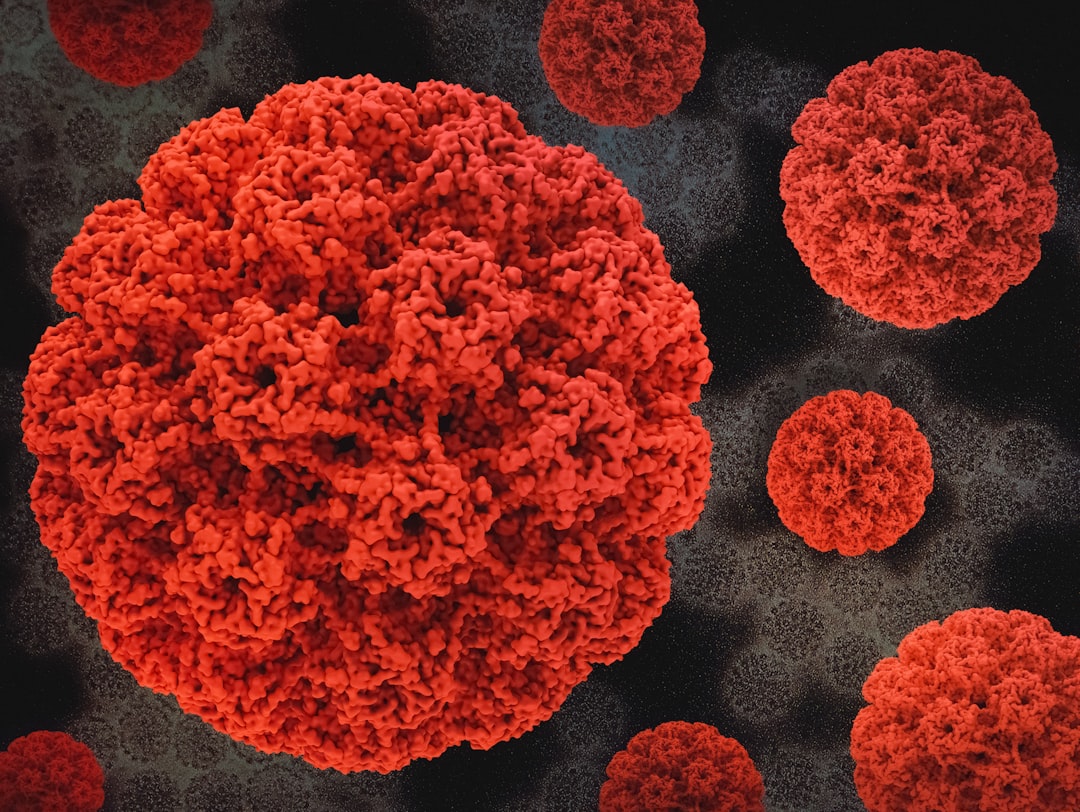
HIV Cure in 2026: Stem Cells, CCR5, and the 11 People Who Beat the Virus
Picture this: you've been living with HIV for 27 years. You take your pills every day, the virus stays quiet, life goes on. Then you get leukemia — because apparently the universe decided one catastrophic diagnosis wasn't enough — and your doctors say the only way to save your life is a bone marrow transplant. They search international donor registries for someone whose immune cells are literally built wrong in a way that makes HIV bounce off them like a drunk guy at a locked door.
That is the actual situation of the Toronto Patient, a 62-year-old man who, as of April 2026, has been off antiretroviral therapy since July 2025 with HIV still undetectable on the most sensitive tests available. If that holds for two and a half years total, he becomes the 11th person on Earth considered cured of HIV. Eleven people. Out of roughly 40 million living with the virus.
So let's answer the question you're actually here for — is there an HIV cure in 2026? — and then build the mental model that makes the answer make sense instead of just being depressing.
Remission vs. Cure: Why Scientists Are Being Careful With Their Words
Here's the annoying-but-important distinction. Remission means HIV is undetectable without daily antiretroviral therapy (ART). Cure means researchers are confident the virus isn't hiding anywhere in your body waiting to wake up and ruin your week.
The bar for calling someone "cured" is roughly two years off ART with no viral rebound. The Berlin Patient — Timothy Ray Brown, the first person ever documented as cured — stayed HIV-free for 13 years before his death from leukemia recurrence. The London Patient, Adam Castillejo, hit 5.5+ years of continuous drug-free control. These aren't marketing claims; they're measured outcomes tracked by research consortiums like amfAR's ICISTEM cohort, which follows people living with HIV who received stem cell transplants specifically to understand how cure happens.
Most of the Toronto Patient's journey is still ahead of him on that clock. But the early data is intense: according to University of Toronto researchers, his HIV DNA in blood cells has been declining for five years post-transplant, they can't isolate viable virus from his CD4 cells, and his HIV-specific T-cell responses have disappeared — which suggests there may be nothing left for his immune system to react to. Dr. Mario Ostrowski put it plainly: "The small but growing number of these cases prove an HIV cure is possible."
How Stem Cell Transplants Actually "Cure" HIV (The Door-Lock Analogy)
Okay, mechanism time. I'm going to explain this like you're a smart person who didn't go to med school, because I didn't either and I needed someone to draw me a cartoon version.
HIV is a virus that infects CD4+ T cells — a type of immune cell. To get inside those cells, HIV needs a handle to grab. That handle is a protein called CCR5, sitting on the cell surface like a doorknob. HIV grabs the doorknob, opens the door, walks in, and sets up shop.
Now imagine a genetic mutation called CCR5-delta32. It's basically a factory defect where the doorknob never gets installed. HIV shows up, reaches for the handle, finds nothing, and just... stands there looking stupid. According to research published in Nature via PMC, this homozygous mutation (two copies, one from each parent) exists in approximately 1% of people of European Caucasian ancestry. It may have evolved around 2,000 years ago, possibly as protection against smallpox — which is the kind of historical detail that makes you feel weird about evolution's creative problem-solving.
A bone marrow transplant replaces your blood-forming stem cells — and therefore your entire immune system — with someone else's. If that someone has the CCR5-delta32 mutation, your new immune system is HIV-resistant. The old infected cells get wiped out during the conditioning regimen (basically nuking your existing marrow to make room), and the new donor cells take over.
That's the Berlin Patient playbook, and it's been replicated — with variations — across a growing list of cases tracked by amfAR:
- Berlin Patient (Timothy Ray Brown, 2007) — the original proof-of-concept
- London Patient (Adam Castillejo, 2019)
- City of Hope Patient (Paul Edmonds, 2022)
- New York Patient (2022)
- Geneva Patient (2023) — first remission with a donor without CCR5-delta32, proving the mutation may not always be essential
- Düsseldorf Patient (Marc Franke, 2023)
- French Patient (2024)
- Second Berlin Patient (2024)
- Chicago Patient (2025) — viral rebound after first ART stop, then sustained remission after retreatment; first case of remission after post-transplant rebound
- Oslo Patient (2025/2026)
- Toronto Patient (2026) — pending confirmation
The Oslo Patient: When Your Brother Wins the Genetic Lottery
The Oslo Patient story is almost absurdly cinematic. A 63-year-old Norwegian man living with HIV since 2006 needed a stem cell transplant for myelodysplastic syndrome, a blood cancer. Doctors couldn't find a matched unrelated donor with CCR5-delta32, so they went with his brother.
On transplant day, they discovered the brother carried the homozygous CCR5-delta32 mutation. The patient later said it was "like winning the lottery twice." I mean — yeah. That tracks.
What makes the Oslo case scientifically huge isn't just the sibling-donor angle (which expands the donor pool for future patients). According to Scientific American, researchers documented complete engraftment not just in peripheral blood and bone marrow — which other cases showed — but also in gut mucosal tissue, one of HIV's primary hiding spots. As lead researcher Anders Eivind Myhre said: "I think we have shown, for the first time, that it's a complete engraftment — both in peripheral blood, which has been shown in several other cases, in bone marrow, which has also been shown in a couple of other cases, and then also the gut mucosal tissue, which we think is key for a cure."
Results published in Nature Microbiology in April 2026, reported by AABB, showed full donor chimerism in peripheral blood by day 90 and in bone marrow at 48 months. More than 65 million CD4+ T cells tested — zero replication-competent virus. No intact proviral DNA in blood or gut tissue. Thirty-six months off ART with no detectable HIV RNA. The investigators were explicit: this is not a scalable cure strategy because of procedure-related mortality risk. But as a research case? Holy shit, it's informative.
Why You (Probably) Can't Get This Treatment
So can anyone with HIV get a stem cell transplant? Cool….but nahhhhhhh.
According to amfAR, "It is not possible to offer bone marrow transplant for those without another indication, such as leukemia, given the risks of the procedure." Bone marrow transplants carry a 10–20% mortality rate, risks of severe infections, and graft-versus-host disease — where donor immune cells attack the recipient's body. As CTN+ notes, these procedures are only performed when the cancer risk exceeds the transplant risk. The Toronto Patient is the only cure case who survived two separate cancers — Burkitt lymphoma in 1999 and acute myelogenous leukemia in 2021 — which tells you something about both his resilience and the insane medical complexity involved.
Forty million people worldwide live with HIV. None of them can access stem cell transplant as a routine cure. ART remains the gold standard: safe, effective, and life-extending. The transplant cases aren't a treatment rollout — they're proof-of-concept experiments that happen to save cancer patients' lives while accidentally (or intentionally) clearing HIV.
CRISPR, Gene Therapy, and the Actual Future
Every cure case fuels the same hope: if we can figure out what the transplant is doing — replacing the immune system, clearing viral reservoirs, triggering graft-versus-host effects that hunt hidden virus — maybe we can replicate it without the 10–20% death rate.
Dr. Ostrowski's lab is exploring whether an mRNA vaccine approach could trigger a T-cell response similar to graft-versus-host disease. Dr. Sharon Walmsley has called for a worldwide registry of CCR5 mutations in donor pools to speed matching for HIV-positive patients who need transplants for cancer. These are the practical, incremental moves.
Then there's the sci-fi stuff. Excision BioTherapeutics ran the first-ever human CRISPR trial targeting HIV proviral DNA — a therapy called EBT-101, delivered via a single IV dose. According to the Innovative Genomics Institute, Phase I/II showed basic safety with no severe adverse events at low doses. But at the doses tested, all three participants who stopped ART experienced viral rebound and had to restart medication. One held out 16 weeks — longer than typical rebound timing — which hints that combination strategies might eventually work. Further testing is on hold indefinitely while the company explores lipid nanoparticle delivery, the same technology behind mRNA vaccines.
So where does that leave us? Gene editing hasn't cracked the code yet. Stem cell transplants work but are medically brutal and available only to a tiny subset of patients. ART keeps millions alive and well. And yet — eleven people (maybe twelve soon) prove the virus can be eliminated from a human body entirely.
What These Cases Actually Teach Us
Zoom out for a second. In 2007, an HIV cure was a fairy tale. In 2026, we have a documented timeline of cases, a understood mechanism (mostly), and edge cases that keep breaking our assumptions — the Geneva Patient cured without CCR5-delta32, the Chicago Patient cured after rebound, the Oslo Patient cured via a sibling donor with full gut engraftment.
Each case is a data point, not a product launch. But the data is accumulating, and the direction is clear: an HIV cure is biologically possible. Making it accessible to 40 million people is the part that remains unfathomably hard — and unfathomably worth pursuing.
Don't wait for a headline that says "HIV Cured for Everyone." That headline isn't coming this year. What is coming is a slow, weird, scientifically meticulous march from "impossible" to "possible for eleven people" to "possible for more." And if you're one of the roughly 40 million living with HIV today, the honest answer is: keep taking your ART, stay informed, and watch this space. The doorknob is getting removed — just not from everyone's door yet.