
How to Choose the Right Living Room Rug
I once bought a 5x7 rug for a living room that could swallow a small car — stood in the middle of the floor like a postage stamp someone forgot to peel off, and every guest who walked in did that thing where their eyes drift downward and their mouth opens slightly, which is the universal facial expression for oh no, you live like this? I had done the dumb thing. I knew it was dumb while I was clicking "add to cart." I did it anyway because the rug was on sale and my brain short-circuited at the word "discount." That rug lasted eighteen months before it looked like a flattened welcome mat that had given up on life.
Choosing a living room rug is not interior design cosplay — it is spatial anchoring, the difference between a room that feels like someone lives there and a room that feels like a furniture showroom where the couches are plotting an escape. This guide covers sizing (including the Two-Thirds Rule), whether your furniture legs belong on or off the rug, material trade-offs for high-traffic zones, whether washable rugs are actually worth the hype, budget picks from IKEA, Ruggable, and Wayfair, and what color rug plays nice with a gray sofa. Let us fix your floor before your floor fixes your reputation.
The Two-Thirds Rule: Sizing a Rug That Does Not Look Like a Bath Mat
Interior designers have a proportion trick called the Two-Thirds Rule, and once you see it you cannot unsee it — like noticing your neighbor always mows the lawn in the same socks. According to Apartment Therapy, your sofa should be roughly two-thirds the length of the rug it sits on. Interior designer Kim Schroeder of Spellacy Schroeder Interiors uses this constantly: the sofa, coffee table, chairs, and side tables should feel proportional on the rug, not like a giant sitting on a coaster.
"Your sofa should be roughly two-thirds the length of your rug. This allows the rug to anchor the seating area without feeling too small or overpowering for the furniture."
Think of it as a thought experiment: imagine your seating area is a dinner plate and the rug is the placemat. If the plate covers 90% of the placemat, you have no placemat — you have a slightly larger plate. The rug needs visible border around the furniture, at least 12 to 18 inches of exposed surface on every side in an all-legs-on layout, per Eastern Oriental Rugs.
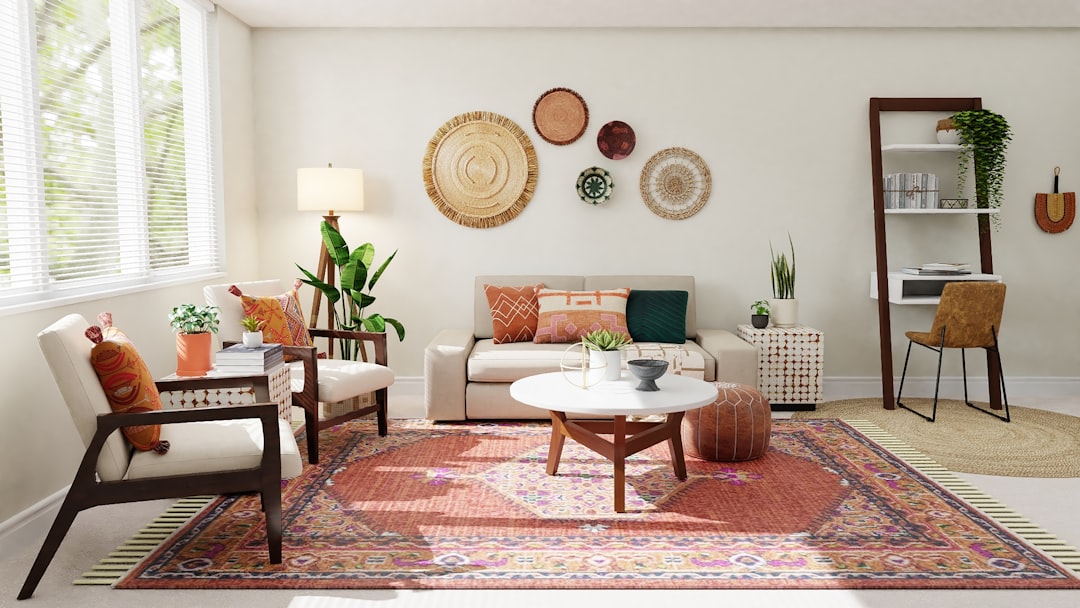
For room-specific sizing, Eastern Oriental Rugs recommends an 8x10 rug with a front-legs-on layout for a medium living room around 12x15 feet, and a 9x12 with all legs on for an average 13x17-foot space. Gray sectionals in great rooms need 9x12 minimum — ideally 10x14 or 12x15 — with front legs of every sectional piece touching the rug, according to Stylish Rugs & Carpets. The single biggest mistake in rug shopping is going too small: a 5x7 floating in a 14x18 room makes your furniture look unmoored, like boats that forgot to tie up at the dock.
All Legs On or Front Legs Only? The Furniture Placement Question
Should all furniture legs be on the rug? Short answer: when your budget and room size allow it, yes — all legs on creates the most cohesive look, like everyone at the dinner table using the same size napkin. When the rug cannot fit everything, front-legs-on is the standard compromise: at minimum, the front legs of your sofa and accent chairs should rest on the rug, and you should not mix approaches within the same seating zone (sofa front legs on, chair legs off — that is visual chaos).
The front-legs-only layout works when you need the rug to define the conversation zone without covering the entire floor — roughly one-third of each piece's depth should sit on the rug. If your sofa is 36 inches deep, about 12 inches of it should overlap the rug edge. The gap between sofa and rug edge should never exceed five inches; any more and the rug reads as an afterthought, a decorative coaster under a coffee table that deserved better.
Material Showdown: Wool, Polypropylene, Cotton, and the Washable Wildcard
What rug material is best for a high-traffic living room? I call this the Fiber Lifespan Gap — the invisible canyon between a material that bounces back from foot traffic and one that gets crushed once and stays crushed forever, like a bad haircut you have to live with until spring.
According to RugKnots founder Naheed Mir, wool rugs can last 50+ years if hand-knotted; polypropylene typically shows matting and wear within 3 to 5 years. Wool fibers are naturally crimped and elastic — they resist crushing under furniture weight. Polypropylene fibers stay flattened once compressed. Wool repels water via lanolin; polypropylene handles water-based spills but absorbs oil-based stains permanently.
"I always tell my clients: buy polypropylene for your patio, your dining room, or a kid's playroom where you know it will get ruined in 3 years. But for your living room or bedroom, invest in wool. A good wool rug will outlast 10 synthetic rugs, saving you money in the long run."
Eastern Oriental Rugs puts it plainly: wool resists crushing, repels small spills, hides dirt between cleanings, and ages beautifully. Cotton and jute work for texture and layering but are not the durability champions for a primary living room. The Spruce confirms wool as the strongest natural option they have tested, with fibers that hold up to frequent foot traffic.
Are Washable Rugs Worth It? The 20-Year Math vs. the Spill-at-7pm Reality
Washable rugs — the Ruggable-style two-piece system with a Velcro-like pad — are machine-made synthetic fiber rugs with printed designs and serged edges. According to Domino Magazine, they are durable, easy to clean, and affordable, but this recipe does not produce the most luxurious rug on earth. Higher pile options help, but you are trading plushness for launderability.
Here is the scale-inversion that matters: a Ruggable 8x10 runs $200 to $600 and lasts 3 to 5 years, per Ahmadi Rug's Bobby Ahmadi. Over 20 years, that is 4 to 7 replacements totaling $1,200 to $2,500 — every old rug headed to landfill. A well-made wool 8x10 starts around $800 machine-woven or $1,500 to $3,000 hand-knotted, lasts 50 to 100 years with professional cleaning every 12 to 18 months, and holds resale value. The twenty-year math works out roughly even. The hundred-year math favors wool by an enormous margin.
Washable rugs make sense for rentals, mudrooms, kids' zones, and households where someone regularly spills red wine within arm's reach of the couch (I am someone). The catch: Ruggable sizes from 5x8 to 8x10 often need a 60-pound commercial washing machine; home washers typically handle only 20 to 25 pounds, per Domino. Check your washer capacity before you buy the big one.
What to Spend: Budget Picks at $100, $300, and $500
How much should you spend on a living room rug? Home Decor Hub breaks it down cleanly: under $100 gets you polypropylene or thin cotton (1 to 3 years — fine for starters and renters); $100 to $300 brings better cotton, jute, or budget wool blends (3 to 7 years); $300 to $600 is the sweet spot for good wool or premium machine-made rugs (7 to 15 years); $600+ enters heirloom territory.
For an 8x10 living room rug specifically, Eastern Oriental Rugs estimates $200 to $500 for synthetic, $400 to $1,200 for hand-tufted wool, and $1,500 to $5,000+ for hand-knotted wool or silk.
Under $100: Starter Tier
IKEA TIPHEDE (around 5x7, ~$20) or Threshold Irregular Diamond Shag at Target (~$100 for larger sizes) — The Spruce named the Threshold shag its best budget pick, performing well in high-traffic rooms. IKEA's washable options like TIPHEDE and STARREKLINTE are unbeatable on price but limited in large sizes — only select dimensions are machine washable.
Around $300: Sweet Spot Tier
Revival Tschudi Washable Wool Rug on Wayfair ($216 to $299) — The Spruce's best wool pick, combining wool durability with machine-washable convenience. AllModern Walker Checkered Shag on Wayfair ($89 to $115) if you want synthetic durability on a tighter budget.
Around $500: Performance Tier
Ruggable Kamran Rug ($499) — The Spruce's best washable pick, tested for stain resistance and machine washability. Dash and Albert Herringbone Flatweave ($545 to $778 for 8x10) — their best overall area rug, low pile and easy to maintain.
What Color Rug Goes With a Gray Sofa?
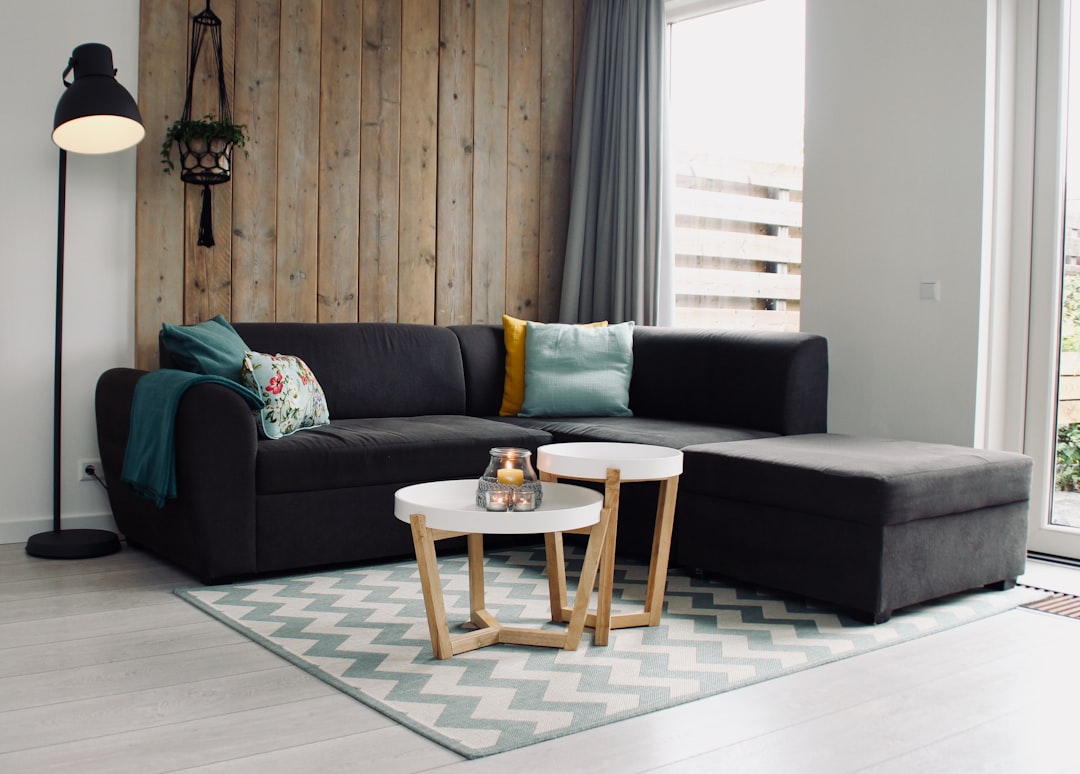
Gray sofas need warm rug accents — the sofa is cold by itself and the rug has to bring warmth, as Stylish Rugs & Carpets puts it. The most reliable pairing is the ivory-rust-navy Persian triad, which works across light gray, charcoal, and slate sofas. Charcoal sofas specifically need lighter rug grounds — cream or ivory — to lift the dark seating rather than doubling its visual weight. Gray-on-gray makes the room read like a furniture-store vignette where nothing has a home.
For drama: aubergine plus ochre plus cream, or deep teal plus cream plus walnut tones. The rug is doing emotional labor your sofa refuses to do. Pick accordingly.
Pulling It Together
Size the rug with the Two-Thirds Rule — sofa at roughly two-thirds the rug length, visible border around the furniture, and go bigger rather than smaller when in doubt. Put all legs on if you can; front legs minimum if you cannot. For high-traffic living rooms, wool is the long-game winner; polypropylene is the short-game rental. Washable rugs earn their keep in messy households but check your washer size and accept the luxury trade-off. Budget $150 to $400 for the sweet spot most people actually need, and if you have a gray sofa, give it a warm rug or accept that your living room will feel like a waiting room at a tech startup.
I replaced my postage-stamp rug with an 8x10 that actually fits the sofa. Guests stopped doing the mouth-open thing. Coincidence? I refuse to investigate.