
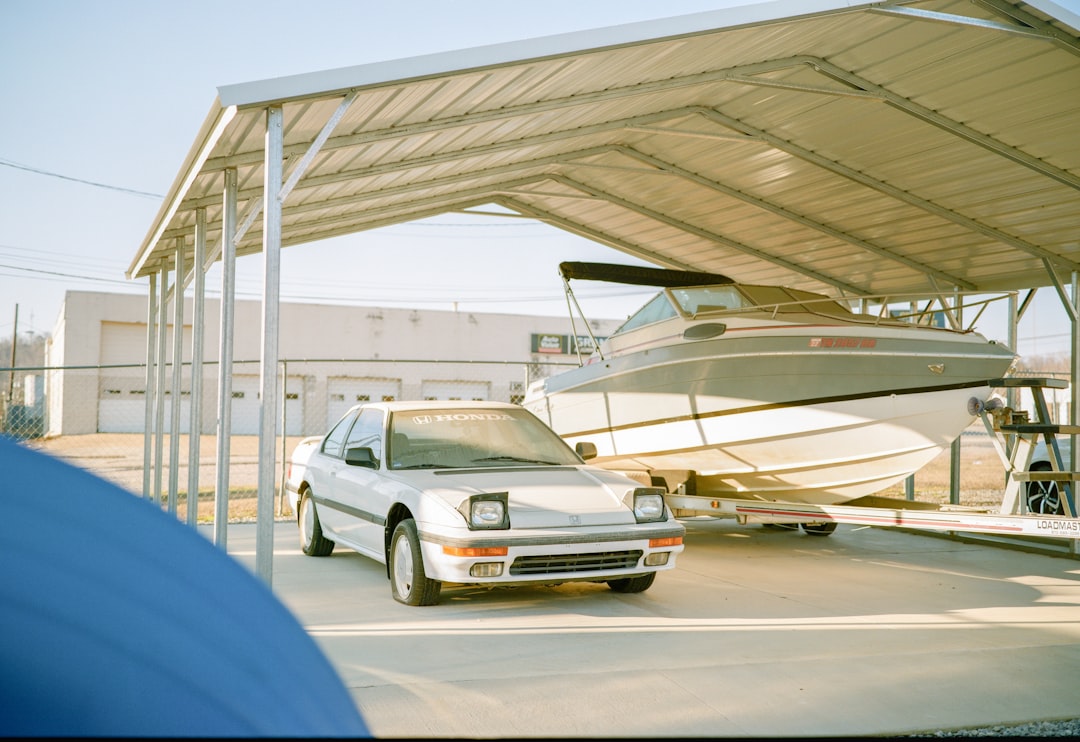
Metal Carport Prices: 2026 Size, Roof & Install Guide
Picture this: you're standing in your driveway at 11 p.m., scrolling carport listings on your phone, rain starting to fall on a truck that cost more than most people's first apartment — and every quote you find uses a different math. That's the Budget-Shock Cascade, and I lived inside it for three weeks before I understood that metal carport pricing isn't one number. It's a stack of decisions about square footage, roof geometry, steel gauge, and whether your county building department considers your structure a carport or a garage wearing a fake mustache.
This guide walks through what a metal carport actually costs in 2026, how to size one for a truck or three cars, whether a carport beats a garage on price, permit rules that catch people off guard, and the vertical-vs-regular roof debate that matters more once you've owned the thing for five winters.
How Much Does a Metal Carport Cost in 2026?
According to HomeGuide, metal carport prices run $8 to $20 per square foot installed — which, if you're trying to feel that in your body, means a 12×20 single-car footprint (240 square feet) lands somewhere between the price of a used riding mower and a modest vacation. Single-car structures in that 12×20 range typically cost $2,000 to $4,800 installed. Step up to a 20×20 two-car layout and you're looking at $3,200 to $8,000.
Angi puts the national average for professional installation at $2,700 to $7,800, with most homeowners landing around $5,400 — the sweet spot where a decent two-car carport with standard options lives. Viking Steel Structures notes that prefab metal buildings in 2026 start around $1,395 for a bare-bones single-car kit and climb past $50,000 for commercial-scale structures, though most residential buyers sit between $4,000 and $15,000.
2026 Pricing by Size and Roof Style
Roof style moves the needle hard. Alan's Factory Outlet breaks kit pricing down by roof type: regular roof averages $4.56 per square foot, boxed eave hits $5.01, and vertical roof runs $5.74. Vertical adds $300 to $800 over regular across most sizes. HomeGuide confirms vertical roofs cost 15% to 30% more than regular roofs, while boxed eave styles sit 10% to 20% above regular.
- Single-car (12×20): $2,000–$4,800 installed
- Two-car (20×20): $3,200–$8,000 installed
- Triple-car (26×30): $2,795–$5,195 for kits; $7,920–$14,400 fully installed per industry estimates
- Portable carport: $400–$1,200 (DIY, not permanent)
- Permanent steel carport: $2,000–$8,000 base range before site prep
Site preparation is the silent budget killer nobody puts in the Instagram post. Grading and leveling run $100 to $500 according to Angi, but HomeGuide warns that full site prep — grading, drainage, concrete — can add $1,000 to $7,000 or more. A concrete slab alone costs $5 to $10 per square foot. On a 400-square-foot two-car pad, that's $2,000 to $4,000 before a single steel beam touches the ground.
What Size Carport Do You Need for a Truck?
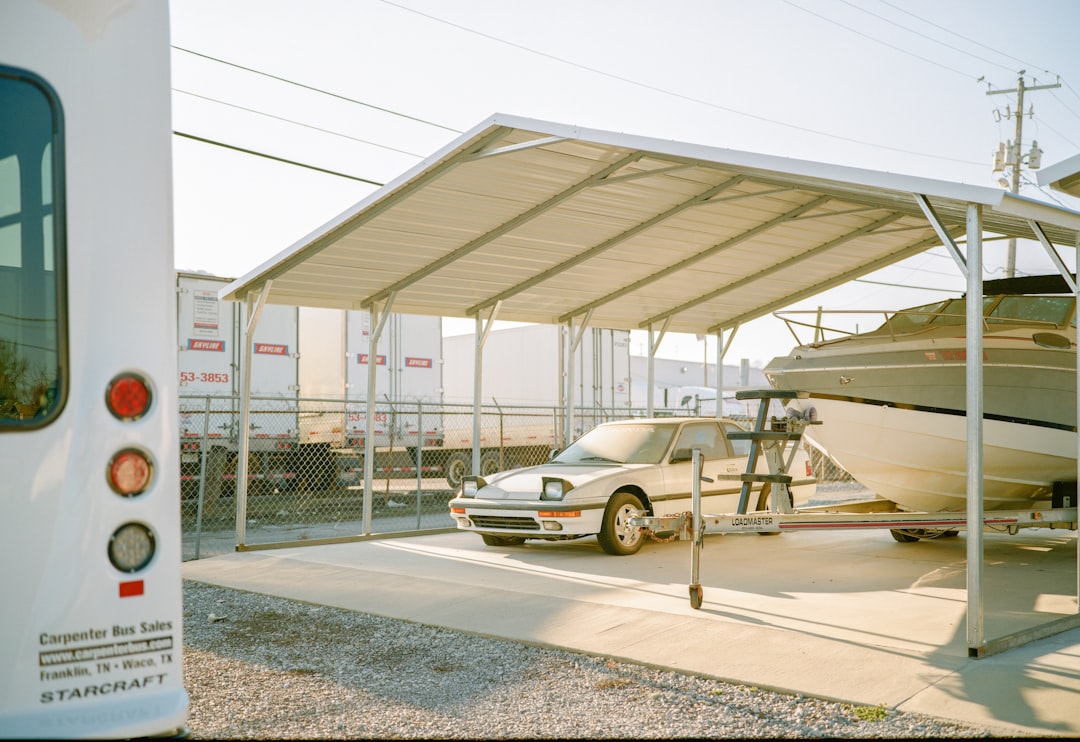
A standard sedan fits under a 12-foot-wide carport like a hat on a head. A full-size pickup with an extended cab and bed? That hat needs to be taller and wider or you're playing a daily game of mirror-clip roulette. Most truck owners need at minimum 12 feet wide and 22 to 24 feet long, with sidewall height of 7 to 8 feet — and if you've got a lifted truck or a topper, push width to 14 feet and height to 9 feet.
For two vehicles including a truck, a 20×20 or 22×24 double-wide is the practical floor. Triple-car coverage at 26×30 or 30×20 gives you roughly 780 square feet of roof — about the size of a studio apartment floating above your driveway. RV and boat covers stretch to 18×36 or 20×40+, running $6,000 to $21,000 depending on height and bracing.
I once measured my truck with a tape measure at midnight because the manufacturer's spec sheet listed "standard vehicle" without defining standard. Don't be me. Measure your actual vehicle — length, width, height with antenna and mirrors — then add 2 feet on each dimension for door swing and breathing room.
Vertical vs Regular Roof: Which Is Better?
Regular roofs are the budget pick — the econo-seat of carport roofing. Alan's Factory Outlet calls them the most affordable option, and they're fine if you live somewhere weather is mostly a theoretical concept. But Direct Metal Structures is blunt about it: vertical roofs perform best in heavy rain, snow, and wind because panels run vertically and shed water, snow, leaves, and whatever else the sky deposits. Regular roofs use horizontal panels that hold debris like a shelf.
Vertical roofs also use hat-channel sub-framing that stiffens the whole structure and distributes loads better — think of it as the difference between a tent pole and an actual rib cage. A-frame roofs split the difference: better water movement than regular, still not vertical-grade. The vertical premium — that 15% to 30% markup — buys you the roof style you'll stop worrying about after the first real storm. I cheaped out on roof style once. Then it rained for eleven straight days and my regular-roof carport developed a leaf lagoon. Authentic horror, zero irony.
Is a Carport Cheaper Than a Garage?
Yes — dramatically. National Steel Buildings lays out the math cleanly: a carport runs $5,000 to $9,000 all-in with basic foundation and carries minimal ongoing maintenance, while a steel garage starts at $8,000 to $20,000 and climbs past $35,000 for a two-car enclosed structure. Viking Steel Structures puts the popular 20×30 two-car metal garage at $5,500 to $8,000 installed — and that's before walls, doors, and electrical.
But here's the value inversion nobody mentions at the sales counter: a two-car enclosed garage typically adds $20,000 to $30,000 to appraised value in most U.S. markets, per National Steel Buildings. Carports add almost nothing to appraisal. You're buying shelter, not equity. Steel carports last 30 to 50 years with $75 to $250 annual maintenance; wood carports cost $450 to $850 yearly and need major repairs after year seven.
Converting a carport to a garage within three to five years runs $8,000 to $15,000 extra — often more than building a garage from scratch. If you know you'll want walls and a door within five years, skip the carport detour.
Permits, Site Prep, and Can You Install It Yourself?
Do you need a permit? Almost certainly yes for anything you'd actually want to keep. LegalClarity explains that the International Residential Code exempts only detached accessory structures under 200 square feet — a threshold about the size of a generous walk-in closet. A standard two-car carport at 400 to 600 square feet blows past that limit. IRC Section R309.2 also requires carports to stay open on at least two sides; close more sides and your carport gets reclassified as a garage with stricter codes.
Permit costs run $75 to $300 per HomeGuide, or $100 to $500 per Angi. Icon Steel Buildings notes many local governments use 120 square feet as a common permit trigger — well below a single-car carport. Building without a permit can mean stop-work orders, daily fines, forced demolition, and insurance claim denials. Retroactive permits often cost double or triple the original fee.
DIY Kit vs Professional Installation
DIY metal carport kits cost $1,000 to $6,000 according to Angi. Hiring a pro adds $1,500 to $5,000 in labor, or $35 to $80 per hour — roughly 20% to 40% of total project cost per National Steel Buildings. On an $8,000 carport, expect $1,600 to $3,200 in labor alone.
Can you install it yourself? Technically yes, if your site is level within 3 inches over the structure's full length — Icon Steel Buildings calls an unlevel site the number-one cause of installation delays and structural problems. Frame assembly takes 3 to 6 hours, panel and roof install another 2 to 4, anchoring 1 to 2 more, plus 4 to 8 hours of site prep and concrete cure time. The delivery truck also needs to get within 50 feet of your build site or you'll pay extra.
I tried the DIY route once with a "how hard can it be" energy that lasted until bolt hole three didn't align with hole three on the other beam. That was the moment Permitting-Ghost met Reality-Ghost in my backyard. Hire a crew if your site isn't dead flat, your municipality requires engineered drawings, or you value weekends.
Site Prep Checklist Before You Order
- Verify setback requirements — typically 5 to 15 feet from property lines
- Confirm permit needs with your local building department before ordering
- Level the site to within 3 inches over the full structure length
- Plan drainage so water doesn't pool under the slab or footings
- Budget for concrete ($5–$10/sq ft) if you're not anchoring to existing pavement
- Ensure delivery access within 50 feet of the install location
- Request engineered drawings stamped for your wind and snow load zone
Bottom Line: What to Budget and Do Next
For most homeowners in 2026, a realistic all-in budget for a permanent two-car metal carport with vertical roof and basic site prep sits between $5,000 and $12,000 — kit, labor, permits, and a modest concrete pad included. Single-car buyers can sometimes land under $4,000 if the site is already flat and permitted. Triple-car and RV structures push toward $10,000 to $18,000.
Get three quotes that specify roof style, steel gauge, wind certification, and whether installation and delivery are included. Pull your permit before the truck arrives, not after your neighbor calls the county. And measure your truck at noon, with daylight, like a person who respects their own time — unlike certain writers who learned everything the hard way at 11 p.m. in the rain.