
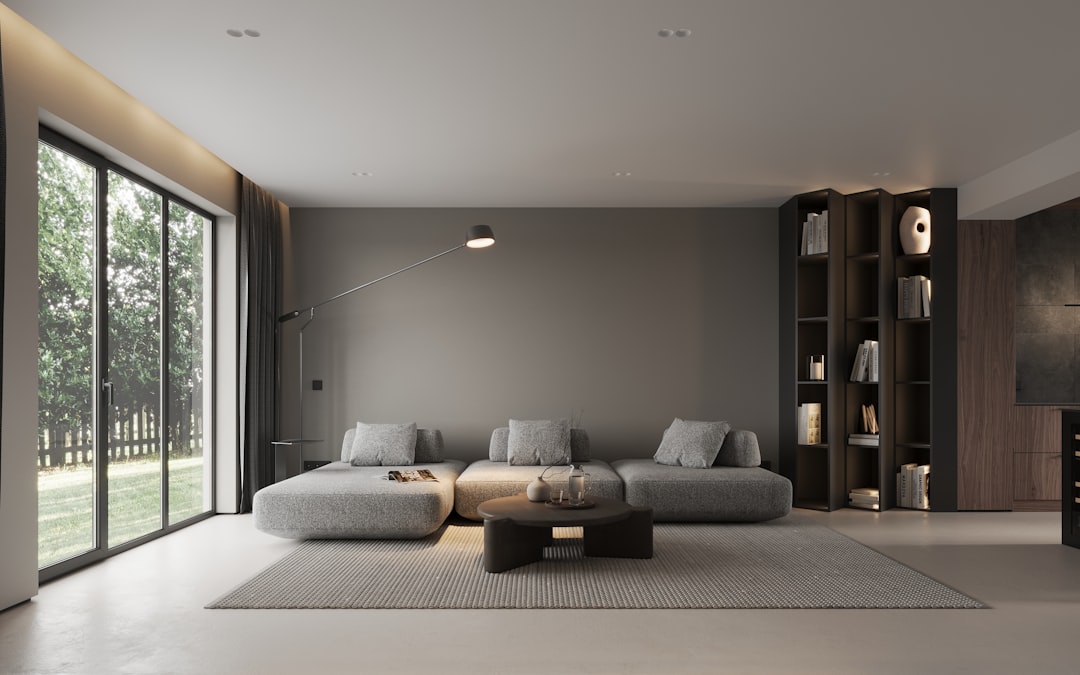
Modern Living Room Design on a Budget (2026 Guide)
Last Tuesday I stood in my own living room holding a paint swatch called "Agreeable Gray" like it was a winning lottery ticket — and then I looked at my walls, which have been the color of a hospital waiting room since 2014, and realized I was basically cosplaying a design trend that died sometime between the first iPad and whatever year we all stopped going outside. The room wasn't bad. It was just gray in the emotional sense, which is worse than bad because bad rooms at least have opinions. Yours might feel the same: not broken, just stuck in what I call the Flat-Light Trap — that specific failure mode where a small-to-medium living room has one overhead bulb, a sofa shoved against a wall, and a rug the size of a bath mat floating in the middle like it's afraid of commitment.
Here's what we're doing together: a full budget-minded reset for modern living rooms — furniture arrangement, 2026 color palettes, layered lighting, and the rug-sizing math that actually matters. No $8,000 sectional required. Think closer to $900 if you're smart about it, and under $500 if you're just trying to stop the room from looking like a storage unit with a TV.
The 3-Part Layout Reset (Your Fastest Fix)
According to HomeDecoria, the fastest path to a bigger-looking living room is a three-part reset — and I hate how right they are, because I violated all three parts simultaneously for roughly four years. Imagine you're standing at the doorway of your living room like a building inspector who just got bad news: if your sofa spans the entire wall like a defensive lineman, your rug could fit inside a bathtub, and you have exactly one ceiling light creating shadows sharp enough to shave with, the room will always read smaller than it is. That's not opinion. That's geometry plus psychology having a bad day.
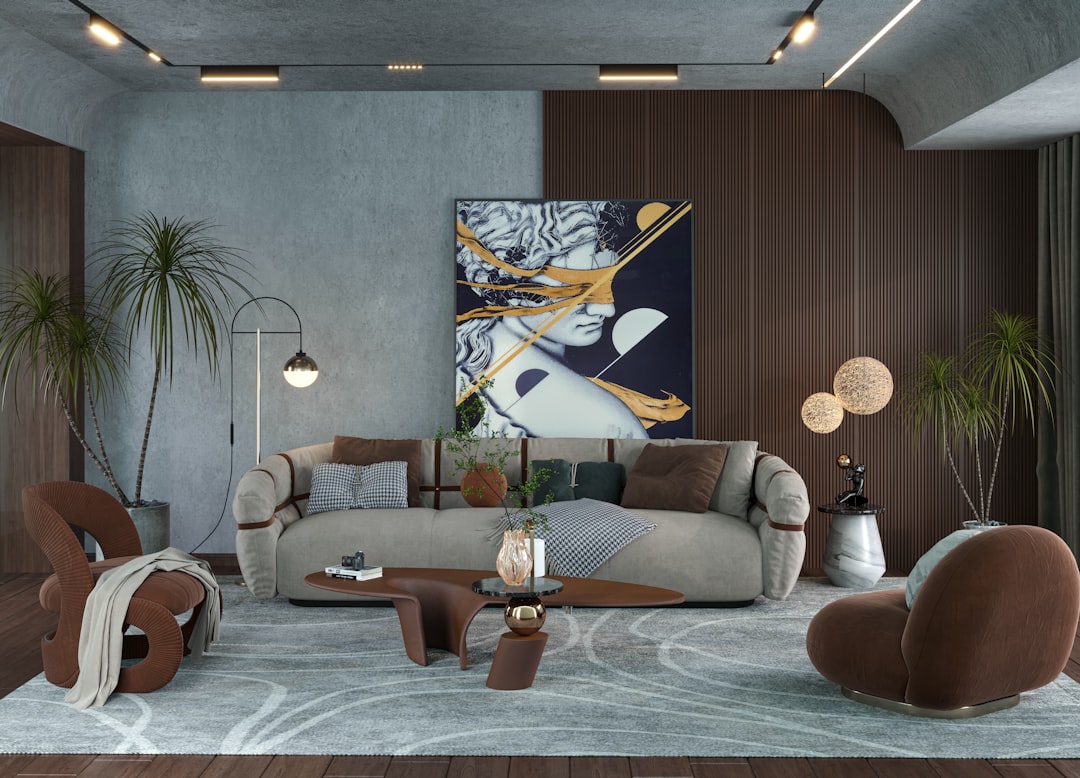
Part 1 — Right-sized sofa. Your sofa should be no longer than two-thirds of the wall it sits against. In a 12-foot wall, that's roughly 8 feet max — about the length of a standard loveseat-plus configuration, or a compact sofa with one accent chair instead of cramming in a sectional that eats the room like a Pac-Man with commitment issues. Pull it 6–12 inches off the wall if you can. Counterintuitive, but floating furniture creates breathing room the eye reads as square footage you didn't know you had.
Part 2 — One big rug, all front legs on. ALRUG puts it plainly: if you're unsure and your room is a standard residential size, an 8×10 is almost always the right answer. For a 12×12 living room specifically — that's 144 square feet, roughly the footprint of a one-car garage if garages were places people actually wanted to hang out — an 8×10 rug is the standard recommendation, leaving 12–24 inches of bare floor visible around the perimeter. The front-legs-on rule (sofa and chairs with their front two legs resting on the rug) is the most popular approach among interior designers because it connects the furniture visually without requiring you to buy a rug the size of a small country.
Part 3 — Three light sources at different heights. One overhead fixture is the design equivalent of using a flashlight to illuminate a cathedral — technically light is happening, but nothing feels right. Layer ambient, task, and accent lighting and the room stops feeling like a cardboard box.
2026 Color Palettes: Warm Neutrals Are Eating Gray's Lunch
So — is gray still in style? Short answer: cool, steely gray is out. Long answer: the gray era is definitively over, and I say that as someone who painted an accent wall "Repose Gray" in 2019 and thought I was being sophisticated. According to Bobby Berk, 2026 favors warmer, earthier, more enveloping tones that prioritize comfort and emotional warmth — warm whites, earthy terracottas, moody greens, soft clay tones. "The gray era is definitely over," Berk writes. "They make people feel better."
Homes & Gardens confirms the shift with data from the paint-industrial complex itself: Emily Kantz, color marketing manager at Sherwin-Williams, notes "a broader shift toward warmer, more dimensional neutrals that feel comfortable and timeless" — green-leaning beiges, soft greiges, putty tones, creamy whites. Greige (that gray-beige blend) remains popular as a compromise. Brown-based hues like caramel and tan are replacing charcoal as the go-to dark neutral for cocooning spaces. Think of it like this: cool gray is a business card. Warm greige is a worn leather jacket. One says "please leave." The other says "stay awhile."
Country Living adds more texture to the palette conversation: warm vintage pinks (dusty, rusty — not Barbie pink), jewel tones for a "going luxe" vibe (deep blues, emerald, gold, warm reds), and full beige color-drenching where walls, ceiling, and trim all share one warm story. Designer Jenni Yolo puts it cleanly: "White walls are softening, and rooms are getting fully color drenched in beige, from the walls to the ceiling to the trim."
HomeDecoria tracked a 67% increase in earth-tone living room design searches over 2025. The top 2026 palette combos worth stealing: terracotta + sage green (warm earth), charcoal + warm taupe (moody neutral — note the warm taupe, not cool gray), and mushroom + cream (soft organic). Standout single colors if you want one can-and-done answer: Sherwin-Williams Accessible Beige (Berk calls it the most reliable warm neutral in the entire range), Benjamin Moore White Dove (off-white that never tips clinical), and sage green as the breakout star of 2026.
How to Arrange a Long, Narrow Living Room Without the Bowling Alley
Long narrow rooms are where furniture goes to create what Ashley Winn Design calls the "bowling alley" look — and yes, I did exactly this: big sofa on one long wall, long media console on the opposite wall, and a hallway of regret running between them. The most common mistake, they write, is pushing a large sofa against one long wall and a long media console against the opposite, which turns your living room into a corridor with furniture.
The fix is zone-thinking. Keep a primary walkway 30–36 inches wide — about the width of a standard door, which is the minimum your body needs to move without performing a sideways shuffle — and position all furniture outside that traffic lane. Divide the room into two functional zones using a console table or bench as a visual separator: TV seating at one end, reading nook or desk at the other. Choose leggy furniture with visible legs that raise pieces off the floor so your eye sees continuous flooring underneath — it creates openness the way removing a belt creates breathing room.
Orient your area rug so its longest side runs across the room's narrow width, perpendicular to the long walls. This visually pushes the walls apart like a horizontal exclamation mark. Skip the single central overhead fixture; use floor lamps or wall sconces in corners to draw the eye toward the room's widest points.
Layered Lighting: How Many Lights Does a Living Room Actually Need?
People ask "how many lights should a living room have?" like there's a municipal code. There kind of is, actually. LightGuru recommends 5–7 light sources spread across different heights: one ceiling fixture, two lamps at seating height, and one to two accent lights for walls, shelves, or corners. A single ceiling light creates harsh shadows and dark corners — horizontal light from floor and table lamps softens contrast and reduces glare.
HomeDecoria adds the math: a well-lit living room needs roughly 20 lumens per square foot. A 300-square-foot room (about 17×17, slightly bigger than your 12×12) needs approximately 6,000 total lumens split across three layers — ambient (1,500–3,000 lumens), task (450–800), and accent (200–400). Use warm white bulbs at 2700K–3000K. Cool white above 4000K makes residential walls feel flat and cold, like a dentist's office that also sells furniture. The American Lighting Association found warm-toned lighting increases perceived comfort ratings in residential spaces by up to 34% — which is a fancy way of saying the right bulb temperature makes people want to stay on your couch instead of inventing reasons to leave.
A $900 Budget Makeover (With Actual Numbers)
Here's a realistic tier breakdown from HomeDecoria's budget research, scaled to a small-to-medium living room refresh:
- Under $500 refresh: 8×10 rug ($179) + floor lamp ($89) + mirror ($99) + floating shelves ($49) + throw pillows ($49) = $465. This alone fixes the Flat-Light Trap for most rooms.
- Under $1,200 upgrade: Add a compact loveseat ($549) + coffee table ($179) to the refresh above.
- Under $2,000 full setup: Modular sectional upgrade ($599) plus the refresh bundle for a complete seating arrangement.
The $900 sweet spot for most people: the $465 refresh plus a $549 loveseat, landing around $1,014 — close enough to call it a $900 makeover if you already own a sofa worth keeping. Prioritize rug first (biggest visual impact per dollar), then lighting, then paint. Paint is cheap relative to its impact — a gallon of Accessible Beige or White Dove runs $40–60 and transforms the entire emotional temperature of a room.
Putting It All Together
Modern living room design on a budget isn't about buying less stuff — it's about buying the right stuff in the right proportions. Right-sized sofa (two-thirds rule), 8×10 rug with front legs on (especially in a 12×12 room), warm neutral palette replacing tired cool gray, and 5–7 light sources at 2700K–3000K. For narrow rooms, zone it, leg it, and rotate that rug perpendicular to the long walls.
I still haven't repainted my gray wall, if you're wondering. But I did buy an 8×10 rug that's actually big enough, added two floor lamps, and swapped my bulbs to 2700K warm white — and the room went from "storage unit with opinions" to "place I'd actually sit down without checking my phone first." Start with the three-part reset. The rest is just paint and patience.